















ISO 13485 Benefits Explained: What Manufacturers Must Know
The Benefits of ISO 13485 include improved product quality, Risk Management, regulatory compliance, customer trust, better access to global markets and growth. It's designed for organisations involved in the production, installation and servicing of up-to-date medical devices and their related services, covering the entire lifecycle.

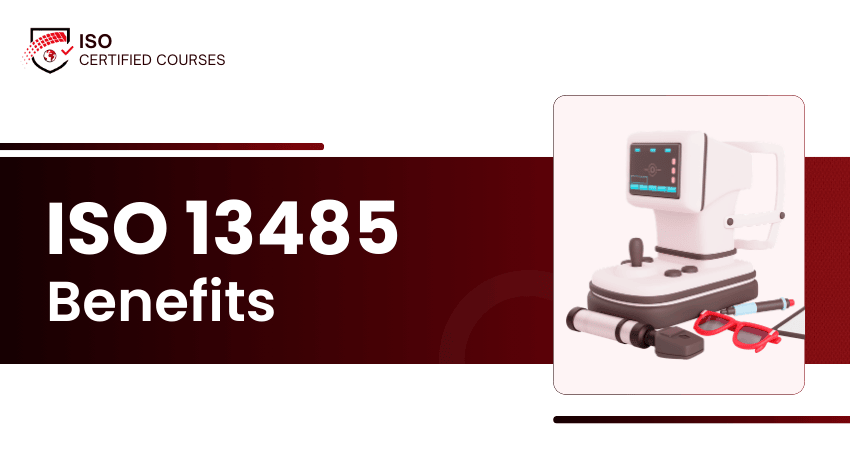
When it comes to the medical device industry, quality and safety are non-negotiable. After all, this industry deals with the very life of people. This is why ISO 13485 has become a globally recognised standard. The Benefits of ISO 13485 help manufacturers build reliable processes and deliver trustworthy medical products.
But its value goes far beyond compliance. From improving operational efficiency to strengthening customer confidence, ISO 13485 plays a vital role in shaping successful medical device organisations. In this blog, we’ll explore the key Benefits of ISO 13485 and why manufacturers should consider adopting this internationally respected standard. Read on!
What is ISO 13485?
ISO 13485 is a trusted standard that outlines the requirements for Quality Management Systems (QMS) that's specific to the medical device industry. It provides organisations with a structured framework for developing, manufacturing and supplying medical devices that consistently meet customer expectations and regulatory requirements. It ensures that every stage meets the highest standards of safety and quality.

Top 13 Benefits of ISO 13485
ISO 13485 serves as a key framework for organisations in the medical device industry. It delivers multiple advantages that boost product quality and improve customer satisfaction. Here are some of the key benefits of implementing ISO 13485:
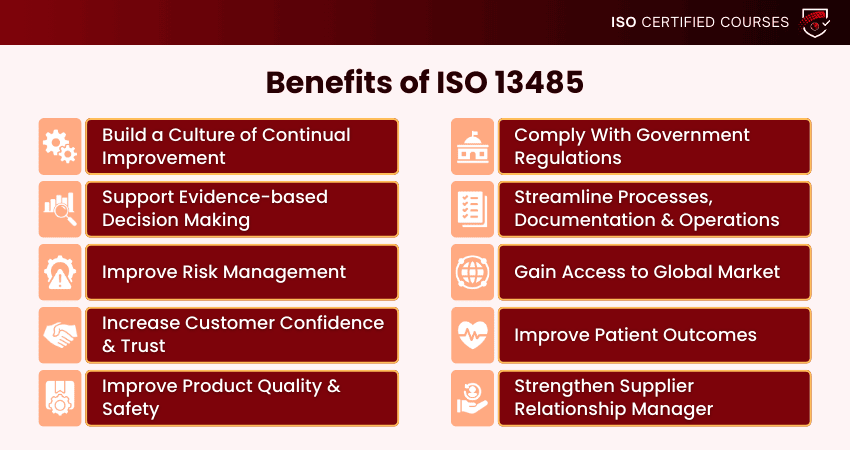
1) Build a Culture of Continual Improvement
Continuous improvement is one of the most fundamental principles of Quality Management. Rather than making a single change and noting a minor improvement, organisations must consistently build on enhancements to drive long-term progress. Implementing a QMS, regardless of organisational size, encourages every department to seek ways to work more efficiently.
2) Support Evidence-based Decision Making
Sustainable improvement demands a clear understanding of the existing processes. By reviewing current practices and analysing the relevant data, organisations can identify recurring issues and uncover opportunities for improvement.
Become the architect of medical compliance with our comprehensive
ISO 13485 Lead Implementer Training
- Register now!
3) Improved Risk Management
ISO 13485 Certification helps build trust among customers, healthcare professionals and regulatory authorities. By following this standard, organisations spotlight their commitment to producing reliable medical devices, thus strengthening their credibility.
4) Increase Customer Confidence and Trust
ISO 13485 Certification represents quality, reliability and regulatory commitment. So, the organisations that follow this standard can gain the trust of customers, healthcare professionals and regulatory authorities. This strengthens confidence in the consistency of their medical devices.
5) Improve Product Quality and Safety
Implementing a Quality Management System helps organisations consistently develop reliable medical devices while reducing the risk of legal issues. With ISO 13485’s strong focus on continual improvement, organisations are better positioned to elevate product quality and overall safety.
6) Comply Government Regulations
Medical device manufacturers must comply with several government regulations. These are primarily overseen by the Food and Drug Administration’s Centre for Devices and Radiological Health (CDRH) in the USA. Complying with these regulatory requirements can help the organisations avoid legal penalties, reduce the risk of fines and protect their reputation in the market.
7) Streamline Processes, Documentation and Operations
ISO 13485 encourages well-structured processes that support consistent operations across the organisation. By standardising the procedures, organisations can minimise duplication, reduce errors and make better use of available resources.
Bring quick clarity to every compliance challenge in the medical device industry. Sign up for our
ISO 13485 Internal Auditor Training
now!
8) Gain Access to Global Market
ISO 13485 Certification helps organisations expand into international markets. As many countries and regulatory authorities recognise it as a requirement for market access, it creates opportunities to reach new customers and grow their business on a global scale.
9) Improve Patient Outcomes
High-quality medical devices help enable accurate diagnoses and contribute to better patient care and overall quality of life. When organisations consistently deliver devices that show positive patient outcomes, it boosts customer satisfaction and strengthens their competitive position in the market.
10) Strengthen Supplier Relationship Manager
ISO 13485 highlights the importance of evaluating and controlling the suppliers. By adopting strong Supplier Management practices, organisations can ensure the quality and reliability of raw materials, components and services that are provided by external partners.
11) Improve Post-market Surveillance
ISO 13485 requires organisations to establish effective post-market surveillance processes. By monitoring and analysing the feedback, complaints and adverse events related to their products, organisations can take timely corrective actions and continuously uphold product safety.
12) Avoid Lawsuits From Patients
Defective medical devices contribute to a significant number of injuries each year. If a device harms a patient and is found to be faulty, the manufacturer may face legal action. However, proving compliance with ISO 13485 shows that the appropriate quality standards were followed. This not only lowers the likelihood of product-related incidents but can also help reduce organisational liability.
13) Drive Competitive Advantage and Business Growth
The ISO 13485 Certification gives organisations a strong competitive advantage within the medical device industry. It bolsters brand credibility, supports market expansion and creates opportunities for better partnerships and collaborations. This contributes to long-term business growth.
Conclusion
ISO 13485 isn’t just a regulatory checkpoint; it’s a blueprint for building trust and efficiency in medical device manufacturing. By embracing the Benefits of ISO 13485, manufacturers strengthen quality, reduce risks and stand out in an increasingly competitive market. Ultimately, ISO 13485 empowers teams to create devices that inspire confidence in every patient they touch.
Every great medical device begins with proper knowledge. Master this knowledge base with our
ISO 13485 Foundation Training
- Sign up now!
Search Smarter
Quickly search through our blog content for what interests you
- ISO 9001 Principles: Quality Management Principles Explained
- ISO 9000 vs ISO 9001: Choosing the Right Quality Standard
- Key Differences Between ISO 9001 and 22000: Explained
- ISO 9001 Requirements: Key Elements for Quality Management
- ISO 45001 Implementation: Benefits and Step-by-Step Guide
- 17 Key Elements of ISO 14001 Environmental Management System
- ISO 17025 Principles: Explained in Detail
- ISO 14001 Checklist: Key Requirements for ISO 14001
- ISO 45001 Objectives: Definition, Plans to Achieve and Examples
- Difference Between OHSAS 18001 and ISO 45001: Detailed Comparison
- ISO 14001 and ISO 50001: What are the Differences?
- What is ISO 27001:2022? Clauses and Requirements Explained
- What is an Integrated Management System (IMS) and its Components?
- ISO 20000 vs ISO 27001: A Complete Comparison Guide 2026
- ISO 13485 vs ISO 9001: A Complete Comparison and Usage Guide 2026
- ISO 27001 vs. ISO 22301: Key Differences & Similarities Explained
- ISO 26000: A Guide to Social Responsibility Standards
No match found
Frequently Asked Questions
No FAQs available for this blog.