
























ISO 14001 and ISO 50001: What are the Differences?
ISO 14001 and ISO 50001 are two standards with different focuses. ISO 14001 focuses on environmental management systems, while ISO 50001 focuses on energy management to improve efficiency, reduce costs and reduce emissions. Both standards drive continuous improvement and structured systems that enhance overall sustainability performance.

Are growing energy costs and environmental responsibilities creating challenges for your operational efficiency? Many might face high pressure to reduce environmental impact while controlling energy consumption and costs. Choosing the right ISO standard can help you address these challenges.
ISO 14001 and ISO 50001 are two widely recognised standards designed to support Environmental and Energy Management. In this blog, we’ll explain what each standard means, its key similarities and differences, and help you decide which option best suits your organisation’s goals and operational needs. Let's dive in!
What is ISO 14001?
ISO 14001 is an internationally recognised standard for Environmental Management System (EMS). It provides a structured framework that helps organisations identify, manage, monitor, and reduce their environmental impacts in a systematic and sustainable way.
It focuses on waste management, emissions reduction, effective resource and energy usage, pollution prevention, and compliance with environmental legislation. By doing this, ISO 14001 promotes continuous business improvement.
What is ISO 50001?
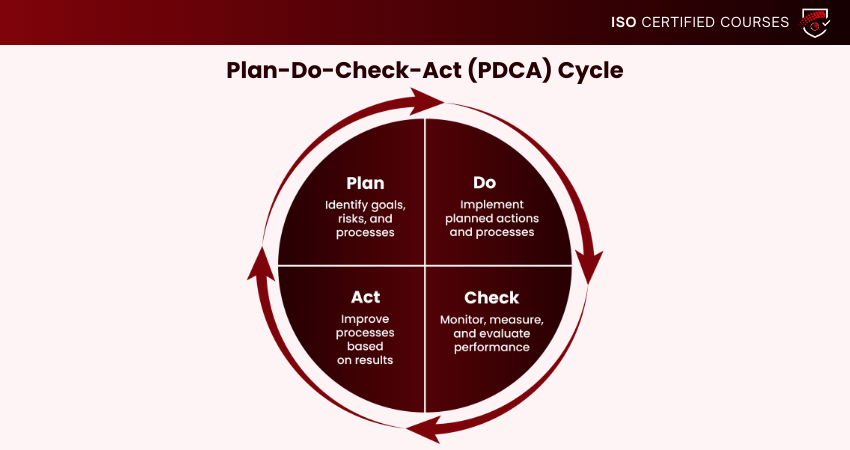
ISO 50001 is an international standard specifically designed for Energy Management Systems (EnMS). Its primary aim is to help organisations use energy efficiently and reduce energy costs, and lower energy-related emissions through the Plan-Do-Check-Act (PDCA) cycle.
ISO 50001 requires businesses to analyse their energy consumption, set an energy baseline, and track energy performance over time. This helps identify areas where energy is wasted and where improvements can be made.
ISO 14001 vs ISO 50001: Key Differences
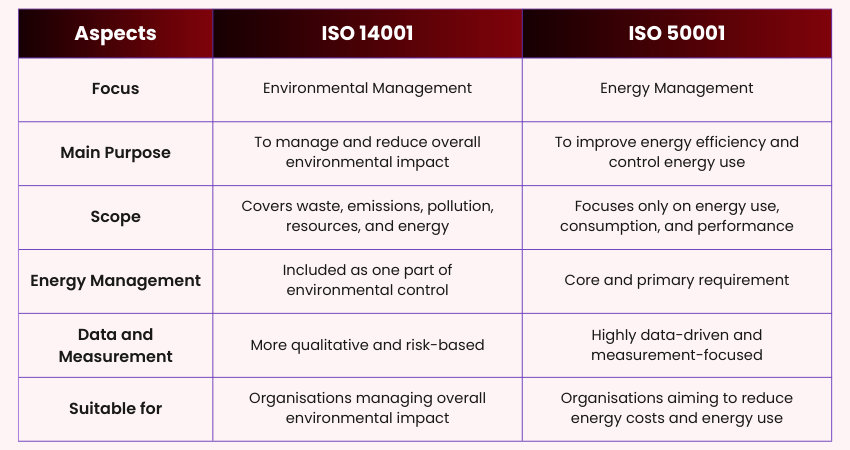
Although ISO 14001 vs ISO 50001 standards support sustainability goals, their intent, scope, and practical application differ in several important ways. Let's check how ISO 14001 and 50001 differ from each other:
1) Scope
The most significant difference between ISO 14001 vs ISO 50001 lies in their scope. Here are what they focus on:
ISO 14001:
ISO 14001 covers all the environmental impacts linked to an organisation’s activities and operations. This includes waste, water use, air emissions, land contamination, biodiversity impact, and resource consumption. Energy is included, but it is only one element within a much broader environmental framework.
ISO 50001:
ISO 50001 focuses exclusively on Energy Management. It looks at how energy is purchased, consumed, measured, and improved. It requires detailed analysis of energy flows and performance, making it more technical and data-intensive.
Overall, ISO 14001 helps organisations manage their overall impact on the environment, while ISO 50001 helps them manage and improve how they use energy.
2) Documented Information
Both ISO 14001 and ISO 50001 require organisations to keep documented information, but the type of information required is different for each standard. Let's check how they differ in this:
ISO 14001:
The documentation process of ISO 14001 usually includes environmental policies, lists of environmental risks, legal requirements, environmental objectives, and procedures to control environmental impacts. The focus is on identifying risks and making sure the organisation meets environmental laws.
ISO 50001:
ISO 50001 documentation is more focused on numbers and data. It includes energy reviews, energy performance indicators, energy baselines, monitoring plans, and records showing energy improvements. Accurate measurement and analysis are essential parts of this standard.
While both ISO 14001 and ISO 50001 follow the same documentation structure, ISO 50001 generally requires more detailed data related to energy usage.
3) ESOS Compliance
In the UK, the Energy Savings Opportunity Scheme (ESOS) is a mandatory energy assessment framework for large organisations. Let's check how ISO 14001 vs ISO 50001 focus on this:
ISO 14001:
ISO 14001 can support organisations in managing energy as part of their wider environmental controls, but it does not fully meet ESOS requirements on its own. Organisations certified to ISO 14001 may still need to complete separate ESOS assessments.
ISO 50001:
ISO 50001 fully meets ESOS requirements. Certification to ISO 50001 is recognised as a compliant route under ESOS, which means organisations do not need to carry out additional ESOS audits.
Overall, ISO 14001 supports Energy Management but does not meet ESOS requirements, while ISO 50001 provides a recognised and compliant route to ESOS compliance.
Learn how to identify gaps and drive sustainability improvement with our
ISO 14001 Internal Auditor Training
– Register today!
ISO 14001 vs ISO 50001: Key Similarities
Despite their differences, ISO 14001 and ISO 50001 share several important similarities that make them compatible and easy to integrate. Here are those similarities:
1) High-level Structure
Both ISO 14001 and ISO 50001 follow the same high-level structure (Annex SL). This makes them easy to integrate and implement together within an organisation.
2) Leadership and Management Commitment
Both standards require strong involvement from senior management. Leadership needs to set objectives, provide resources, and ensure that the management system supports business goals.
3) Continuous Improvement Approach
ISO 14001 and ISO 50001 both follow the Plan-Do-Check-Act cycle. Organisations are expected to regularly monitor performance and make ongoing improvements.
4) Risk-based Thinking
Both ISO 14001 and ISO 50001 standards focus on identifying risks and opportunities. Organisations should assess potential issues, plan controls, and take action to prevent negative impacts.
5) Documented Information
Each standard requires documented policies, objectives, and records. This helps ensure consistency, traceability, and effective system management.
6) Performance Monitoring and Review
Both standards require regular monitoring, internal audits, and management reviews to ensure objectives are being met and improvements are achieved.
7) Compliance Focus
ISO 14001 and ISO 50001 both support compliance with relevant legal and regulatory requirements, helping organisations reduce compliance risks and penalties.
Lead successful EMS implementation with our
ISO 14001 Lead Implementer Training
– Join soon!
What are the Benefits of Implementing ISO 14001 and 50001?
Now, let’s check the benefits that are gained by the organisations from ISO 14001 and 50001:
ISO 14001 Benefits
1) Helps organisations identify and reduce their environmental impact
2) Supports compliance with environmental laws and regulations
3) Improves Waste Management and supports efficient use of resources
4) Reduces environmental risks and chances of legal penalties
5) Encourages sustainable practices across daily operations
6) Supports continuous environmental performance improvement
ISO 50001 Benefits
1) Helps organisations reduce energy consumption and energy costs
2) Improves energy efficiency through structured Energy Management
3) Provides better visibility and control over energy usage
4) Supports compliance with energy-related regulations and requirements
5) Helps reduce carbon emissions linked to energy use
6) Encourages continual improvement in energy performance
ISO 14001 vs ISO 50001: How to Decide?
The choice between ISO 14001 and ISO 50001 is entirely dependent on your organisation’s priorities. If your main goal is to manage overall environmental impact, improve environmental compliance, and meet customer sustainability expectations, ISO 14001 usually suits you.
If energy costs are high and energy efficiency is a key business issue for your organisation, then ISO 50001 may be the better choice. When you know what you want to improve, you can select the standard that can help improve your operational efficiency.
Conclusion
ISO 14001 and ISO 50001 both support organisations in becoming more sustainable and efficient. Knowing the difference helps organisations choose the right standard or decide to implement both. As environmental responsibility and energy efficiency become more important for competitiveness and compliance, choosing the right ISO standard is a strategic business decision.
Take the next step in environmental responsibility with our
ISO 14001 Training
– Sign up now!
Search Smarter
Quickly search through our blog content for what interests you
- ISO 9001 Principles: Quality Management Principles Explained
- ISO 9000 vs ISO 9001: Choosing the Right Quality Standard
- Key Differences Between ISO 9001 and 22000: Explained
- ISO 9001 Requirements: Key Elements for Quality Management
- ISO 45001 Implementation: Benefits and Step-by-Step Guide
- 17 Key Elements of ISO 14001 Environmental Management System
- ISO 17025 Principles: Explained in Detail
- ISO 14001 Checklist: Key Requirements for ISO 14001
- ISO 45001 Objectives: Definition, Plans to Achieve and Examples
- Difference Between OHSAS 18001 and ISO 45001: Detailed Comparison
- What is ISO 27001:2022? Clauses and Requirements Explained
- What is an Integrated Management System (IMS) and its Components?
- ISO 13485 Benefits Explained: What Manufacturers Must Know
- ISO 20000 vs ISO 27001: A Complete Comparison Guide 2026
- ISO 13485 vs ISO 9001: A Complete Comparison and Usage Guide 2026
- ISO 27001 vs. ISO 22301: Key Differences & Similarities Explained
- ISO 26000: A Guide to Social Responsibility Standards
No match found
Frequently Asked Questions
No FAQs available for this blog.