
























17 Key Elements of ISO 14001 Environmental Management System
The Key Elements of ISO 14001 are the essential components that help organisations build, implement, and maintain an effective Environmental Management System. This system provides a structured framework for environmental protection by identifying environmental aspects, implementing programs and reviewing and improving the system.

Protecting the planet is the defining challenge of our time. It's no longer just a noble idea; it's a responsibility every organisation must embrace. This is where the ISO 14001 comes in. It guides Environmental Managers through 17 key elements of ISO 14001 that turn their ambition into impactful action. From policy creation to performance evaluation, each piece plays a vital role in building an eco-conscious organisation.
Essentially, each of these Key Elements of ISO 14001 is a building block of environmental excellence. This blog explores these elements in detail, helping you outline the blueprint for sustainability. So read on, become the watchdog of sustainability and lead the charge to a greener future!
Table of Contents
1) What are the 17 Elements of ISO 14001?
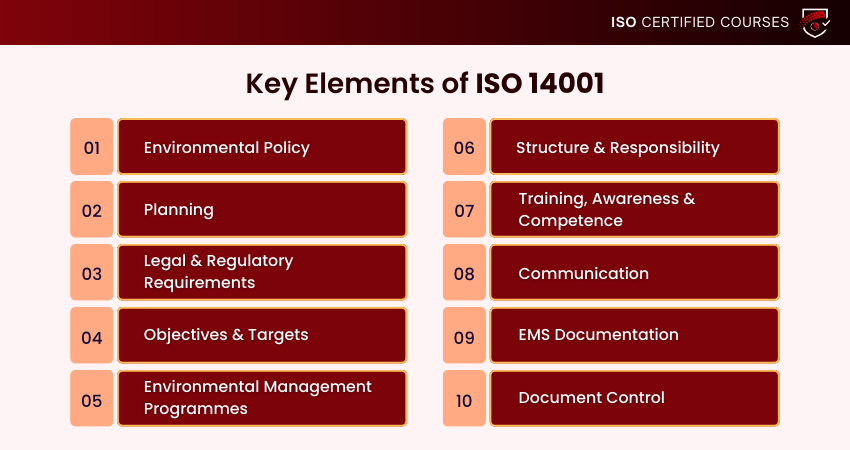
a) Environmental Policy
b) Planning
c) Legal & Regulatory Requirements
d) Objectives & Targets
e) Environmental Management Programmes
f) Structure & Responsibility
g) Training, Awareness & Competence
h) Communication
i) EMS Documentation
j) Document Control
2) Conclusion
What is ISO 14001 (Environmental Management System)?
ISO 14001 provides every organisation with a structured framework that help minimise the environmental impact of their operations. Achieving this certification is important because it demonstrates a clear commitment to reducing waste, using resources efficiently and promoting sustainability. When starting ISO 14001, the first question is usually, “How do we begin the implementation?”
Since every business is different, an Environmental Management System (EMS) under ISO 14001 will be different depending on their current practices. The best starting point is a Gap Analysis. It compares ISO 14001 requirements with the existing processes to identify any areas that need improvement.

What are the 17 Elements of ISO 14001?
The 17 Key Elements of ISO 14001 form a rock-solid foundation for an effective EMS. These elements help you make sure that your organisation manages its environmental responsibilities, shows its commitment to Sustainable Project Management and upholds sustainable practices. Let’s explore these elements in detail:
1) Environmental Policy
The environmental policy is crucial because it outlines the organisation’s commitment to protecting the environment and improving sustainability. It lays down clear goals to reduce risks and ensure compliance with established standards. This policy also serves as a guideline for the employees to follow.
2) Planning
This element involves identifying various environmental aspects, assessing their impacts and setting objectives to address them. It helps make sure that resources are perfectly allocated to achieve these goals. Careful planning makes the EMS practical and results-driven.
3) Legal & Regulatory Requirements
Organisations must comply with all environmental laws, regulations and standards pertaining to their activities. Compliance is essential not only to avoid penalties but also to maintain a positive reputation. It also shows responsibility towards the community and stakeholders.
4) Objectives & Targets
Setting measurable objectives enables organisations to track their environmental performance effectively. These targets promote continuous improvement and progress. They also serve as a benchmark to recognise achievements and identify areas needing attention.
5) Environmental Management Programmes
These programmes define how objectives will be met, including roles, timelines, and performance indicators. They help ensure consistent action across the organisation. Strong programmes bring accountability and measurable results.
6) Structure & Responsibility
Organisations must assign roles clearly and provide the resources required for effective EMS implementation. Both people and funds are essential for success. Defined responsibilities ensure there is no confusion or overlap in tasks.
Become the change agent your organisation and the planet need. Sign up for our ISO 14001 Training now!
7) Training, Awareness & Competence
Employees must be trained and aware of their environmental responsibilities. Having the right skills ensures tasks are done effectively. Awareness also builds a culture of environmental responsibility across the organisation.
8) Communication
Effective communication ensures everyone is informed about environmental goals, policies, and outcomes. It involves both internal and external sharing of information. Clear and open communication enhances transparency and builds stakeholder trust.
9) EMS Documentation
It focuses on what needs to be documented. Organisations should maintain accurate and safe records of environmental activities. These records are important for audits and decision-making. Well-maintained records also ensure transparency and accountability.
10) Document Control
Proper documentation ensures all procedures, records, and work instructions are well organised. Document control focuses on how the documents are managed and prevents errors and ensures consistency. It also provides concrete proof of compliance during audits.
11) Operational Control
Organisations must put controls in place for activities that affect the environment. This ensures compliance with environmental requirements. It also reduces risks from daily operations and improves sustainability.
12) Emergency Preparedness & Response
Companies need to prepare for possible environmental emergencies with response plans and drills. This ensures quick and effective action during crises. Being prepared also reduces damage and increases confidence among stakeholders.
13) Monitoring & Measurement
Regular monitoring helps track environmental performance using key indicators. It provides valuable data to support decision-making and drive improvements. Monitoring also helps determine whether environmental goals are being met or if corrective actions are required.
14) Non-conformance & Corrective Action
When non-conformities occur, organisations must investigate the cause, implement corrective actions, and take steps to prevent recurrence. This process supports continuous improvement within the EMS. Proactive corrective and preventive actions also help save time and resources in the long run.
15) Evaluation of Compliance
Organisations must regularly check whether they comply with environmental laws and standards. This helps identify gaps and prevent issues before they escalate. It also shows commitment to accountability and legal responsibility.
Become the watchdog of environmental excellence with our comprehensive ISO 14001 Internal Auditor Training - Register now!
16) Environmental Audits
Regular internal audits check whether the EMS is effective and aligned with ISO 14001. They help find areas for improvement and ensure compliance. Audits also provide confidence to management and stakeholders.
17) Management Review
Top management goes on to review the Environmental Management System to make sure it remains effective and suitable. These reviews also identify opportunities for growth and improvement. Regular reviews keep the EMS up-to-date with business needs.
Conclusion
Mastering the Key Elements of ISO 14001 is nothing short of having the keys to a greener tomorrow in your own hands. For Environmental Managers everywhere, these elements function as powerful tools to inspire greater performance and safeguard the planet. By empowering yourself with these principles, your organisation can transform responsibility into action and lead the way towards lasting environmental excellence.
Be the catalyst for continuous environmental improvement with our ISO 14001 Lead Implementer Course - Sign up now!
Search Smarter
Quickly search through our blog content for what interests you
- ISO 9001 Principles: Quality Management Principles Explained
- ISO 9000 vs ISO 9001: Choosing the Right Quality Standard
- Key Differences Between ISO 9001 and 22000: Explained
- ISO 9001 Requirements: Key Elements for Quality Management
- ISO 45001 Implementation: Benefits and Step-by-Step Guide
- ISO 17025 Principles: Explained in Detail
- ISO 14001 Checklist: Key Requirements for ISO 14001
- ISO 45001 Objectives: Definition, Plans to Achieve and Examples
- Difference Between OHSAS 18001 and ISO 45001: Detailed Comparison
- ISO 14001 and ISO 50001: What are the Differences?
- What is ISO 27001:2022? Clauses and Requirements Explained
- What is an Integrated Management System (IMS) and its Components?
- ISO 13485 Benefits Explained: What Manufacturers Must Know
- ISO 20000 vs ISO 27001: A Complete Comparison Guide 2026
- ISO 13485 vs ISO 9001: A Complete Comparison and Usage Guide 2026
- ISO 27001 vs. ISO 22301: Key Differences & Similarities Explained
- ISO 26000: A Guide to Social Responsibility Standards
No match found
Frequently Asked Questions
No FAQs available for this blog.