






Key Differences Between ISO 9001 and 22000: Explained
ISO 9001 focuses on Quality Management across industries, while ISO 22000 focuses on food safety and hazard prevention in the supply chain. Both standards improve efficiency, compliance, and customer trust. Together, they help businesses meet global standards, boost market credibility, and maintain both quality and safety in operations.

How do you know if your current processes are enough to satisfy regulators and customers alike? In today’s business world, proving quality and safety is no longer optional. It has become a necessity for trust, compliance, and growth. That’s where ISO standards of ISO 9001 and 22000 come in.
ISO 9001 improves quality across all industries, while ISO 22000 focuses on food safety. Many businesses find it challenging to see the differences or know if both are needed. Understanding their differences shows how these standards meet requirements, improve efficiency, reduce risks, and build credibility. In this blog, we’ll explain ISO 9001 and ISO 22000 in clear terms and their requirements. Let's delve in!
Table of Contents
1) What is ISO 9001?
2) What is ISO 22000?
3) What are the Differences Between ISO 9001 and 22000?
4) How ISO 9001 Supports the Implementation of ISO 22000?
5) Conclusion
What is ISO 9001?
ISO 9001 is an internationally recognised Quality Management System (QMS). It gives businesses a structured framework to follow so they can consistently meet customer needs, follow rules, and improve how they work. This can be used by any type of organisation, whether large or small, in any sector.
The standard is based on seven Quality Management principles, which includes customer focus, leadership, engagement of people, process approach, continual improvement, evidence-based decision-making, and relationship management.
Key Requirements of ISO 9001
1) Quality Policy and Objectives: Organisations need to set a clear policy and objectives that support their business goals and show commitment to quality.
2) Process Approach: Businesses need to plan, document, and improve their processes to work efficiently and deliver consistent results.
3) Resource Management: Effective use of people, skills, infrastructure, and materials is required to achieve quality targets.
4) Monitoring and Measurement: Regular tracking of performance through Key Performance Indicators (KPIs) helps identify gaps and lead to decisions.
5) Continuous Improvement: ISO 9001 promotes a culture of regularly reviewing, fixing issues, and improving systems and processes.

What is ISO 22000?
ISO 22000 is a global Food Safety Management System (FSMS). It is designed for any business in the food chain, from farms and processors to packaging, transport, and retail. Its main goal is to prevent food safety problems and protect consumers.
This standard combines general management practices with food-specific tools such as Hazard Analysis and Critical Control Points (HACCP). It works with global food safety rules and ensures food safety risks are identified, controlled, and prevented.
Key Requirements of ISO 22000
1) Interactive Communication: Strong communication across the food chain ensures safety information is shared quickly and accurately.
2) Prerequisite Programmes (PRPs): Basic hygiene and safety measures like cleaning, pest control, and staff hygiene are the starting point for food safety.
3) HACCP Principles: HACCP is used to spot risks, set safety limits, check processes, and fix problems when needed.
4) Management System: A documented FSMS with clear policies, procedures, and objectives is required, supported by leadership and resources.
5) Verification and Improvement: Regular checks, audits, and updates show the system works and help improve it to handle new risks.

What are the Differences Between ISO 9001 and 22000?
Now, let’s check the differences between ISO 9001 and ISO 22000:
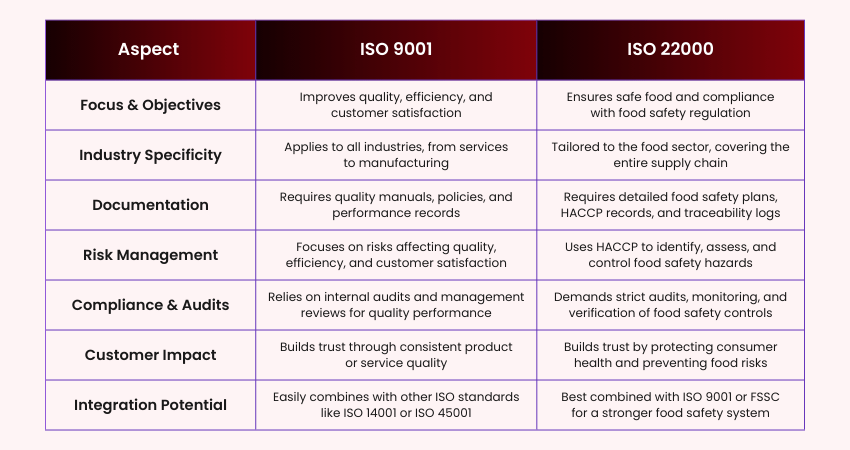
1) Risk Management
ISO 9001 focuses on risks that affect quality, such as poor processes or customer complaints.
ISO 22000 deals with risks related to food safety, such as bacteria, chemicals, or foreign objects in food.
2) Documentation
ISO 9001 requires documents such as quality manuals, policies, and records of performance.
ISO 22000 requires more detailed paperwork, including food safety plans, HACCP records, and monitoring logs to keep complete records.
3) Industry Specificity
ISO 9001 is a universal standard that can be used in any industry, like healthcare, IT, or manufacturing.
ISO 22000 is specific to the food industry, focusing on making sure food and drinks are safe to consume.
4) Focus and Objectives
ISO 9001 aims to improve quality, efficiency, and customer satisfaction with continual improvement.
ISO 22000 focuses on consumer health and regulatory compliance. It aims to ensure consumer safety and meet food regulations.
Address food safety risks and stay compliant with our
ISO 22000 Foundation Training
– Register today!
How ISO 9001 Supports the Implementation of ISO 22000?
ISO 9001 and ISO 22000 use a similar management system, so they work well together. A good Quality Management System from ISO 9001 gives a strong base for adding the food safety rules of ISO 22000. Here’s how ISO 9001 helps strengthen ISO 22000 practices:
1) Process Alignment: The process of ISO 9001 works well with ISO 22000’s methods for finding and controlling food safety risks.
2) Improvement Culture: ISO 9001 offers continuous improvement, which helps keep ISO 22000 strong and effective.
3) Management Engagement: ISO 9001 requires strong leadership and responsibility, ensuring the Food Safety Management System (FSMS) gets the right support and resources.
4) Customer Satisfaction: ISO 22000 focuses on food safety, while ISO 9001 ensures overall quality. Together, they build greater trust in both safety and service.
ISO 9001 acts as a starting point that focuses on general Quality Management, and it helps prepare for ISO 22000, which is more focused on food safety requirements.
Conclusion
ISO 9001 and 22000 are two powerful standards, but they target different goals. ISO 9001 is about managing overall quality in any sector, while ISO 22000 deals specifically with food safety. For food-related businesses, they work best together. ISO 9001 improves systems and customer focus, while ISO 22000 ensures food is safe. Overall, they build trust and improve efficiency.
Drive quality improvements in your business processes with our ISO 9001 Lead Implementer Training – Explore now!
Search Smarter
Quickly search through our blog content for what interests you
- ISO 9001 Principles: Quality Management Principles Explained
- ISO 9000 vs ISO 9001: Choosing the Right Quality Standard
- ISO 9001 Requirements: Key Elements for Quality Management
- ISO 45001 Implementation: Benefits and Step-by-Step Guide
- 17 Key Elements of ISO 14001 Environmental Management System
- ISO 17025 Principles: Explained in Detail
- ISO 14001 Checklist: Key Requirements for ISO 14001
- ISO 45001 Objectives: Definition, Plans to Achieve and Examples
- Difference Between OHSAS 18001 and ISO 45001: Detailed Comparison
- ISO 14001 and ISO 50001: What are the Differences?
- What is ISO 27001:2022? Clauses and Requirements Explained
- What is an Integrated Management System (IMS) and its Components?
- ISO 13485 Benefits Explained: What Manufacturers Must Know
- ISO 20000 vs ISO 27001: A Complete Comparison Guide 2026
- ISO 13485 vs ISO 9001: A Complete Comparison and Usage Guide 2026
- ISO 27001 vs. ISO 22301: Key Differences & Similarities Explained
- ISO 26000: A Guide to Social Responsibility Standards
No match found
Frequently Asked Questions
What are the 4 Pillars of ISO 22000?
The four key pillars of ISO 22000 are:
1) Interactive communication across the food chain
2) System management to maintain a structured FSMS
3) Prerequisite Programmes (PRPs) for hygiene and safety
4) HACCP principles for hazard analysis and control
What are the Pillars of ISO 9001?
There are seven Quality Management pillars of ISO 9001. It includes customer focus, leadership, engagement of people, process approach, improvement, evidence-based decision-making, and relationship management.
What does FSSC Stand for?
FSSC refers to Food Safety System Certification. It is a well-known system for certifying Food Safety Management by combining ISO 22000 with industry-specific requirements. It makes sure food stays safe at every step.