
























ISO 26000: A Guide to Social Responsibility Standards
ISO 26000 is a guideline that helps organisations operate in a socially responsible and ethical way, enabling them to contribute positively to society. It encourages businesses to build trust, act responsibly, and support sustainable growth. It helps strengthen organisational reputation and create long-term value for society.

Many organisations struggle to balance business growth with Social Responsibility. While companies aim to increase profits and expand their operations, they are also expected to act ethically, protect the environment, and contribute positively to society. This is where ISO 26000 becomes valuable.
It provides guidance that helps organisations understand their impact on society and integrate sustainable actions into the way they run their business. In this blog, we will explore What is ISO 26000, who should use it, its core subjects, and how organisations can implement it to promote responsible business practices. Let’s get started!
What is ISO 26000?
ISO 26000 is an international standard that provides guidance on how businesses and organisations can carry out their operations in a socially responsible manner. It focuses on ethical behaviour, transparency, and accountability by integrating Social Responsibility into organisational values, policies, and daily operations.
Unlike many other ISO standards, ISO 26000 is not designed for certification. The goal of ISO 26000 is to help organisations understand their broader impact on society and the environment. It encourages businesses to consider how their decisions affect employees, communities, consumers, and ecosystems.

Who Should Use ISO 26000: Social Responsibility?
ISO 26000 is designed for a wide range of organisations across industries and sectors. One of the key strengths of the standard is its flexibility, as it applies to organisations of all sizes and types, including government agencies, businesses, non-profit organisations, and educational institutions.
Large corporations often use it to guide their corporate Social Responsibility strategies and sustainability programmes. Smaller businesses can also use the guidance to improve ethical practices and build stronger relationships with customers and communities. Overall, ISO 26000 is useful for any organisation that wants to operate responsibly and build trust with stakeholders.
The Seven Core Subjects of ISO 26000
ISO 26000 is based on seven core subjects that represent the main areas of Social Responsibility. The following are the core subjects:
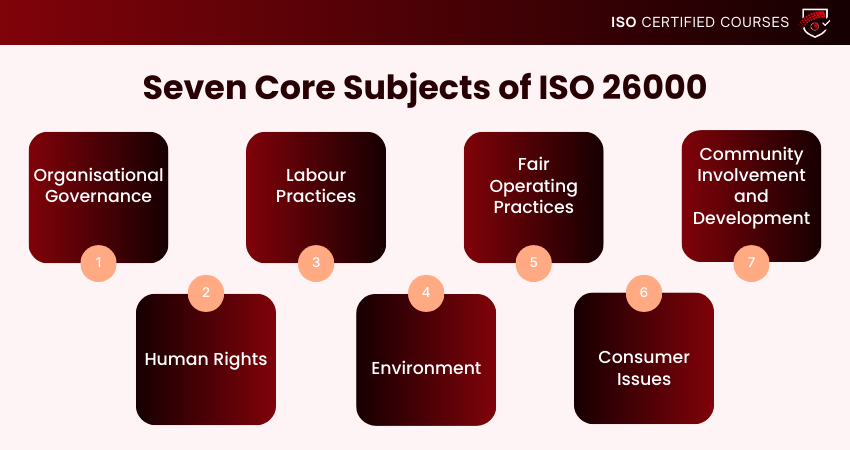
1) Organisational Governance
Organisational governance refers to how an organisation is managed and how decisions are made. It includes leadership, policies, decision-making processes, and accountability. Good governance ensures that an organisation acts ethically, responsibly, and transparently. To achieve this, leaders create clear policies, follow ethical values, and make decisions that benefit both the organisation and society.
2) Human Rights
Human rights are a fundamental aspect of Social Responsibility. ISO 26000 encourages organisations to ensure that their activities do not harm people or violate human rights. This includes avoiding discrimination, forced labour, and harassment in the workplace. Businesses should also create fair and inclusive workplaces where employees are treated with respect.
3) Labour Practices
Labour practices focus on how organisations treat their employees. ISO 26000 emphasises the importance of providing safe working conditions, fair wages, and opportunities for professional growth and satisfaction. Organisations can support employees by offering training programmes, skill development opportunities, and career advancement pathways. When employees feel valued and supported, they are more motivated and productive.
4) Environment
Environmental responsibility focuses on minimising the negative impact that business activities can have on the environment. Organisations should take steps to protect natural resources and prevent pollution through responsible practices. ISO 26000 encourages companies to manage waste effectively, use energy responsibly, and reduce their carbon footprint.
5) Fair Operating Practices
Fair operating practices refer to ethical behaviour in business relationships with partners, suppliers, competitors, and other organisations. ISO 26000 encourages organisations to operate honestly and avoid corruption, bribery, and unethical business behaviour. It also promotes transparency and fairness in business dealings to build trust and maintain responsible partnerships.
6) Consumer Issues
Consumers play a prominent role in the success of any organisation. ISO 26000 highlights the responsibility of businesses to provide safe, reliable, and transparent products and services. Organisations should ensure that consumers receive accurate information about products, including safety instructions, usage guidelines, and potential risks. Honest marketing and transparent communication help build consumer trust.
7) Community Involvement and Development
Organisations can have a strong influence on the communities where they operate. ISO 26000 encourages businesses to contribute to the social and economic development of these communities. This can take many forms, including supporting education initiatives, promoting local employment, and investing in infrastructure development.
Benefits of ISO 26000
Adopting ISO 26000 can bring several benefits to organisations that want to function responsibly. Let's check the benefits that this standard can bring:
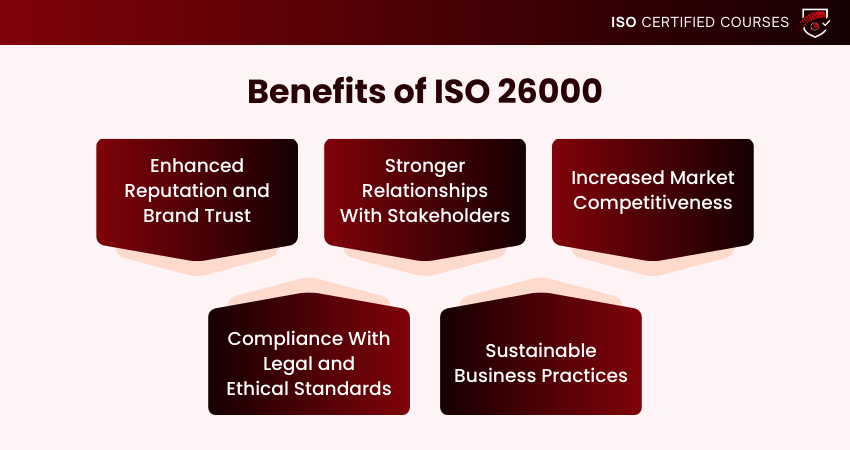
1) Enhanced Reputation and Brand Trust
ISO 26000 helps organisations build a positive brand reputation by encouraging ethical and responsible behaviour. When businesses act transparently and care about society and the environment, customers and partners will trust them, which strengthens their brand image.
2) Stronger Relationships With Stakeholders
ISO 26000 helps organisations communicate and work closely with employees, customers, suppliers, and communities. By knowing their needs and expectations, organisations can build stronger relationships and create better collaboration.
3) Increased Market Competitiveness
Organisations that follow responsible practices often gain an advantage in the market. Many customers prefer businesses that care about social and environmental issues, which can help companies attract more opportunities and partnerships.
4) Compliance With Legal and Ethical Standards
ISO 26000 encourages organisations to understand the laws and regulations related to responsible and sustainable practices. By promoting transparency and accountability, the standard helps organisations align their practices with legal and ethical expectations and reduce the risk of reputational or legal issues.
5) Sustainable Business Practices
ISO 26000 encourages organisations to consider the long-term impact of their activities on society and the environment. By using resources wisely and supporting community development, organisations can achieve sustainable growth.
Take the next step towards a sustainable business future with
ISO 26000 Social Responsibility Training
– Register today!
How do You Implement ISO 26000 in Your Organisation?
Implementing ISO 26000 involves integrating Social Responsibility into the organisation’s values, strategies, and daily activities. Let's check how you can do it:
1) Understand the Principles of ISO 26000
The first step is to become familiar with the concepts and core subjects of ISO 26000, such as accountability, transparency, and ethical behaviour. This helps organisations understand how their activities affect society and the environment.
2) Evaluate the Organisation’s Current Practices
Review your organisation’s existing policies and operations to identify how well they align with Social Responsibility principles. This assessment helps find areas that need improvement.
3) Identify and Engage Stakeholders
Identify key stakeholders such as employees, customers, suppliers, and communities. Engaging with them helps organisations understand expectations and make more responsible decisions.
4) Develop Social Responsibility Policies
Create policies and strategies that promote responsible practices. These policies may focus on areas such as ethical business conduct, human rights protection, environmental responsibility, and fair labour practices.
5) Integrate Responsibility into Daily Operations
Social Responsibility should become part of the organisation’s everyday activities. This means including ethical practices in decision-making, employee training, supplier management, and operational processes.
6) Provide Training and Awareness
Employees play an important role in implementing ISO 26000. Organisations should provide training and awareness programmes to help employees understand responsible practices and their role in supporting these initiatives.
7) Monitor Progress and Improve Continuously
Organisations need to regularly review their Social Responsibility activities to track progress and find areas for improvement. This helps organisations stay aligned with their goals and improve their responsible practices over time.
Challenges of ISO 26000
Although ISO 26000 offers valuable guidance, organisations may face several challenges when implementing it. These include:
1) Broad Guidelines:
The standard provides general guidance rather than specific requirements, which can make implementation challenging.
2) Resource Constraints:
Some organisations may struggle to allocate time, money, or staff to implement Social Responsibility initiatives.
3) Difficulty in Measuring Impact:
It can be difficult to measure the results or effectiveness of Social Responsibility efforts.
4) Lack of Certification:
ISO 26000 is not a certifiable standard, so organisations cannot receive official certification to prove compliance.
5) Lack of Awareness:
Some organisations may have a limited understanding of ISO 26000 and its importance, which can slow adoption.
Conclusion
ISO 26000 provides valuable guidance for organisations that want to act responsibly and contribute positively to society. Although ISO 26000 is not a certification standard, its principles help organisations build trust, strengthen their reputation, and develop sustainable practices. This also creates long-term business value for both their stakeholders and the communities they serve.
Learn how to implement responsible business practices with our
ISO 26000 Training
– Join now!
Search Smarter
Quickly search through our blog content for what interests you
- ISO 9001 Principles: Quality Management Principles Explained
- ISO 9000 vs ISO 9001: Choosing the Right Quality Standard
- Key Differences Between ISO 9001 and 22000: Explained
- ISO 9001 Requirements: Key Elements for Quality Management
- ISO 45001 Implementation: Benefits and Step-by-Step Guide
- 17 Key Elements of ISO 14001 Environmental Management System
- ISO 17025 Principles: Explained in Detail
- ISO 14001 Checklist: Key Requirements for ISO 14001
- ISO 45001 Objectives: Definition, Plans to Achieve and Examples
- Difference Between OHSAS 18001 and ISO 45001: Detailed Comparison
- ISO 14001 and ISO 50001: What are the Differences?
- What is ISO 27001:2022? Clauses and Requirements Explained
- What is an Integrated Management System (IMS) and its Components?
- ISO 13485 Benefits Explained: What Manufacturers Must Know
- ISO 20000 vs ISO 27001: A Complete Comparison Guide 2026
- ISO 13485 vs ISO 9001: A Complete Comparison and Usage Guide 2026
- ISO 27001 vs. ISO 22301: Key Differences & Similarities Explained
No match found
Frequently Asked Questions
No FAQs available for this blog.