



ISO 27001 Audit: A Complete Guide to the Audit Process
Explore the ISO 27001 Audit process, from planning and checklist to audit stages, corrective actions, benefits, and certification readiness. A structured audit approach helps organisations evaluate the effectiveness of their Information Security Management System (ISMS), address nonconformities, and maintain long-term compliance.


Strong information security is achieved through regular evaluation to ensure security controls are effective, risks are managed, and compliance is maintained. An ISO 27001 Audit provides organisations with a structured way to assess their Information Security Management System (ISMS), identify areas for improvement, and strengthen security practices.
Whether you are preparing for your first certification or maintaining an existing ISMS, understanding the ISO 27001 Audit process is key to a successful outcome. In this blog, you will learn about its types, stages, benefits, and more. So, let’s get started!
What is ISO 27001 Audit?
An ISO 27001 Audit is a systematic assessment of an organisation's Information Security Management System (ISMS) to verify that it meets the requirements of the ISO 27001 standard. It evaluates the effectiveness of information security policies, risk management processes, and security controls in protecting sensitive information.
The ISO 27001 Audit confirms that the organisation follows its documented security procedures and continually improves its ISMS. By identifying non-conformities and areas for improvement, it helps maintain compliance and strengthen information security. It also provides assurance to stakeholders, customers, and regulators that appropriate security controls are in place and operating effectively.
Types of ISO 27001 Audits
Regular audits help organisations verify that their Information Security Management System remains effective and compliant with ISO 27001 requirements. The two main types of ISO 27001 Audits are:
1) Internal Audit
An internal audit is conducted by the organisation's internal team or authorised auditors to evaluate the effectiveness of its ISMS. It identifies gaps, verifies compliance with ISO 27001 requirements, and supports continual improvement before a certification audit. Internal audits also help organisations prepare for external audits by addressing weaknesses early and improving overall audit readiness.
2) External Audit
An external audit is carried out by an independent certification body to confirm that the organisation meets ISO 27001 requirements. It provides an impartial assessment and is required to achieve or maintain ISO 27001 Certification. External audits are typically conducted in stages and must be passed successfully to obtain and retain certification status.
Stages of the ISO 27001Audit
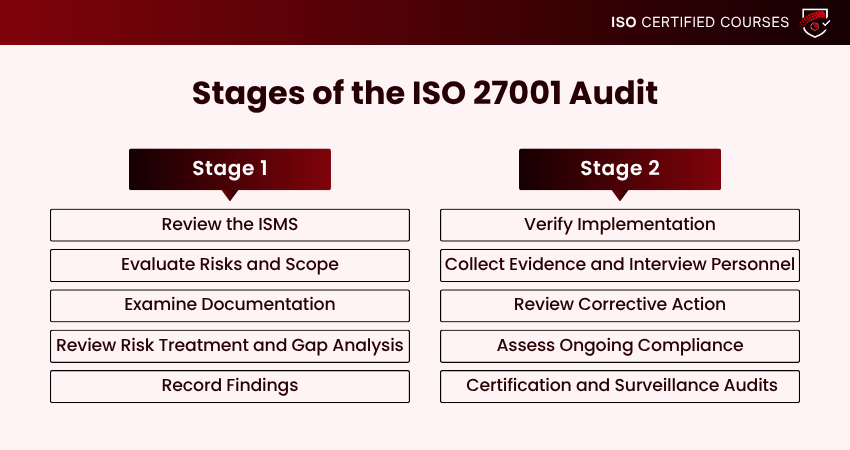
The ISO 27001 Audit is completed in two stages. Each stage has a specific purpose, ensuring that an organisation's ISMS is properly documented, effectively implemented, and ready for certification. Let’s learn about it below:
Stage 1
Stage 1 assesses whether the organisation's ISMS is designed in accordance with ISO 27001 requirements and is ready for the certification audit. Here, the key activities include:
a) Review the ISMS: Assess the design of the ISMS and its alignment with ISO 27001 requirements.
b) Evaluate Risks and Scope: Verify the risk assessment, audit scope, security objectives, Statement of Applicability (SoA), and applicable legal requirements.
c) Examine Documentation: Review ISMS policies, procedures, and security controls to ensure they meet the ISO 27001 standard.
d) Review Risk Treatment and Gap Analysis: Evaluate the risk treatment plan and identify gaps that require corrective action.
e) Record Findings:
Document non-conformities, observations, and recommendations before proceeding to Stage 2.
Stage 2
Stage 2 verifies that the ISMS has been implemented effectively and operates as intended across the organisation. The main activities include:
a) Verify Implementation: Assess whether security controls are implemented and functioning effectively.
b) Collect Evidence and Interview Personnel: Review records, inspect processes, and interview key personnel to confirm compliance.
c) Review Corrective Actions: Ensure findings identified during Stage 1 have been addressed effectively.
d) Assess Ongoing Compliance: Review plans for continual improvement, including internal audits and security awareness activities.
e) Certification and Surveillance Audits:
Successful completion leads to ISO 27001 Certification, followed by annual surveillance audits to maintain compliance.
ISO 27001 Audit Process
The ISO 27001 Audit process follows a structured sequence to evaluate whether an Information Security Management System complies with the standard. Let’s learn about the steps below:
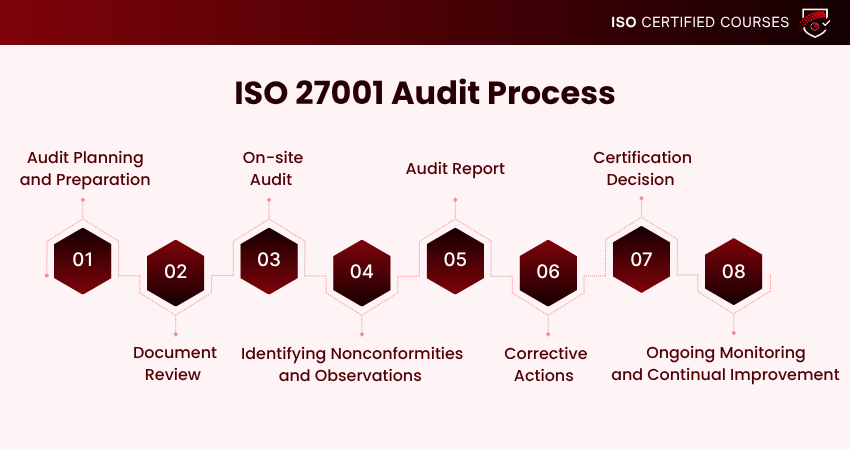
1) Audit Planning and Preparation
The audit begins by defining its scope, objectives, and criteria. An audit plan is then created, outlining the schedule, areas to be assessed, and resources required. Clear planning ensures the audit is focused, efficient, and aligned with the organisation's security objectives. Effective planning also ensures that key stakeholders are informed and resources are allocated appropriately.
2) Document Review
The Auditor reviews key ISMS documents, including information security policies, risk assessments, risk treatment plans, and the Statement of Applicability. This confirms that the required documentation is complete and aligned with ISO 27001 requirements. This step helps identify documentation gaps before the practical implementation is assessed.
3) On-site Audit
The Auditor evaluates how the ISMS operates in practice by interviewing employees, reviewing records, observing processes, and assessing the effectiveness of security controls. This stage verifies that documented policies are implemented across the organisation. It ensures that the ISMS is not only documented but actively followed in day-to-day operations.
4) Identifying Nonconformities and Observations Any issues
identified during the audit are recorded as non-conformities or observations. It may be classified as minor or major, while observations highlight opportunities to further improve the ISMS. These findings help organisations prioritise corrective actions and strengthen their security posture.
5) Audit Report
Once the audit is complete, the Auditor prepares a report summarising the findings, including non-conformities and recommendations for improvement. The report provides a clear record of the audit outcome and the actions required to maintain compliance. This report acts as a formal reference for decision-making and future audits.
6) Corrective Actions
The organisation must address any identified non-conformities by implementing corrective actions. The certification body reviews the evidence to confirm that the issues have been resolved. Also, timely corrective actions demonstrate the organisation's commitment to continual improvement and compliance.
7) Certification Decision
If the audit requirements are met and any major non-conformities have been closed, the certification body issues the ISO 27001 Certificate. This confirms that the organisation's ISMS meets the requirements of the ISO 27001 standard.
8) Ongoing Monitoring and Continual Improvement
After certification, the organisation maintains compliance through regular internal audits, risk assessments, management reviews, and continual improvement. Continuous monitoring helps the organisation adapt to evolving risks and maintain long-term compliance.
Learn to audit smarter and improve continuously with the
ISO 27001 Internal Auditor Training
– Join now!
How to Prepare for an ISO 27001 Audit?
Preparing thoroughly for an ISO 27001 Audit helps organisations demonstrate compliance, reduce non-conformities, and complete the audit efficiently. Let’s look at the key steps that can help ensure your ISMS is ready for assessment:
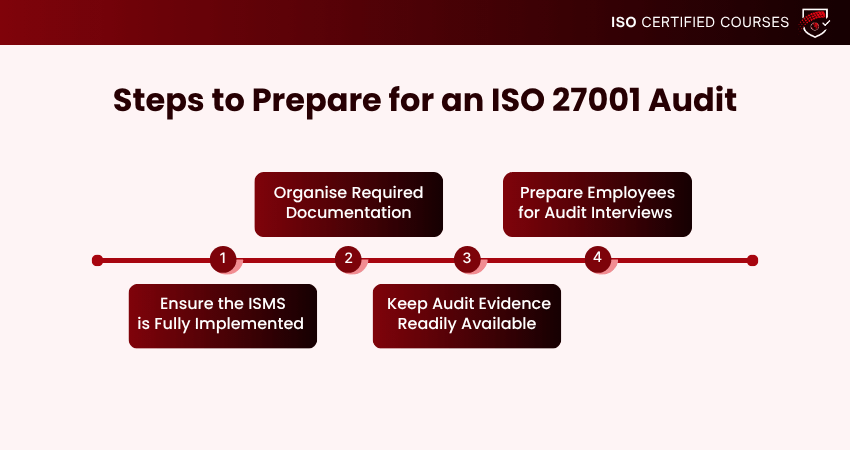
1) Ensure the ISMS is Fully Implemented
Confirm that your ISMS is fully operational before the audit. Review the organisational context, risk assessments, risk treatment plan, security policies, management reviews, leadership commitment, and corrective actions to ensure they comply with ISO 27001 requirements.
2) Organise Required Documentation
Prepare the ISMS documents, including the ISMS scope, information security policy, risk assessment and treatment plan, SoA, and relevant Annex A policies and procedures. Well-organised documentation enables Auditors to verify compliance efficiently.
3) Keep Audit Evidence Readily Available
Ensure that records, logs, policies, and other supporting evidence are accurate, up to date, and easy to locate. Employees and relevant contractors should also know where this evidence is stored so it can be provided promptly during the audit.
4) Prepare Employees for Audit Interviews
Brief employees on the audit's purpose, scope, and process, and review their responsibilities within the ISMS. Conduct mock interviews, provide security awareness training, and address any knowledge gaps so staff can respond confidently and accurately to auditor questions.
ISO 27001 Audit Checklist
An ISO 27001 Audit checklist helps organisations verify whether their Information Security Management System is properly documented, implemented, and maintained. It provides a structured way to review key areas before an internal or certification audit. Let’s learn more about it below:
a) ISMS Scope: Confirm that the ISMS scope clearly defines the systems, locations, business processes, and third parties covered by the audit.
b) Policies: Review key information security policies to ensure they are current, approved, and aligned with ISO 27001 requirements.
c) Annex A Controls: Verify that applicable Annex A controls are implemented and supported with appropriate evidence, such as records or logs.
d) Records and Documentation: Check important documents, including the risk register, risk treatment plan, Statement of Applicability, and audit records.
e) Training and Awareness: Ensure employees have completed security awareness training and understand their information security responsibilities.
f) Audit and Review:
Review internal audit reports, management reviews, and corrective actions to confirm that the ISMS is regularly monitored and improved.
Lead audits that make an impact by joining the
ISO 27001 Lead Auditor Training
now!
Benefits of ISO 27001 Auditing
ISO 27001 Audits help organisations strengthen their information security, improve risk management, and maintain the effectiveness of their ISMS. Let's look at some of the key benefits below:
a) Supports ISO 27001 Certification: A successful external audit demonstrates compliance with the ISO 27001 standard and is required to achieve or maintain certification.
b) Improves Risk Management: Audits identify weaknesses in the ISMS, enabling organisations to address risks before they lead to security incidents.
c) Ensures Compliance: Regular audits verify that the organisation meets applicable legal, regulatory, and contractual information security requirements.
d) Strengthens Information Security: Audits confirm that security controls are implemented effectively and help improve the overall performance of the ISMS.
e) Builds Stakeholder Confidence: ISO 27001 Certification and regular audits demonstrate a commitment to protecting information, increasing trust among customers, partners, and regulators.
f) Drives Continual Improvement: Audit findings provide valuable insights that help organisations refine their ISMS, adapt to emerging risks, and maintain long-term compliance.
Conclusion
An ISO 27001 Audit is an opportunity to strengthen information security, improve risk management, and build lasting trust with stakeholders. By preparing thoroughly, addressing audit findings, and embracing continual improvement, organisations can maintain compliance, protect valuable information assets, and create a secure business environment.
Build and strengthen security that inspires trust with the ISO 27001 Training Courses – Sign up now!
Search Smarter
Quickly search through our blog content for what interests you
- Top ISO 9001 Internal Audit Questions and Answers in 2026
- ISO 27005 vs ISO 31000: How to Choose the Right Risk Framework
- Challenges of ISO 14001 and How to Overcome Them
- Top 14 Benefits of ISO 45001 Certification
- What are the ISO 27001 Requirements: A Complete 2026 Guide
- 12 Benefits of ISO 27001 Certification for Business
- ISO 27001 vs ISO 27002: Key Difference and Uses Cases
- ISO 17025 vs ISO 9001: Key Differences and Similarities
- ISO 45001 Requirements for Occupational Health & Safety
- ISO 9001, 14001, and 45001: Key Differences and Similarities
- ISO 27001 vs SOC 2: Understanding Key Differences
- ISO 17025 Requirements: Explained in Detail
- What is ISO 27001 Gap Analysis? A Complete Overview
- ISO 17025: An Overview of Laboratory Accreditation
- What is ISO 27001: An Overview of the Information Security Standard
- ISO 27001 Controls from Annex A: What Changed in ISO 27001:2022?
- What is ISO 50001: Meaning, Requirements & Clauses Explained
- Top 10 Benefits of ISO 50001: A Detailed Explanation
- What is a Quality Management System (QMS): A Comprehensive Overview
- ISO 22000: Food Safety Management System Explained
- What is the Statement of Applicability (SoA) in ISO/IEC 27001?
- What is ISO 31000? The Risk Management Standard Explained
- What Is ISO 13485? Understanding Its 8 Key Sections
- ISO 56000: A Comprehensive Guide to Innovation Management
- What is ISO 14064? Components, Execution, and Benefits Explained
- Carbon Footprint: Definition, Types, and How to Calculate It
- ISO 22301: Requirements, Benefits and How to Implement It?
- ISO 9001 vs ISO 9002: Key Differences You Should Know
- Carbon Accounting: Meaning, Benefits, and Challenges
- Ecological Footprint: Meaning, Importance, and Purpose
- Compliance Management System: Components and How to Implement
- What is Competency Management? Benefits, Tips and Best Practices
- ISO 9001 and 27001: Quality Management vs Information Security Management
- ISO 27001 Annex A Controls: Everything You Need to Know
No match found
Frequently Asked Questions
Who Needs to be ISO 27001 Certified?
ISO 27001 Certification is valuable for organisations that handle sensitive data or operate in regulated industries. It is commonly required for SaaS providers, cloud services, financial institutions, healthcare organisations, and B2B businesses that must demonstrate strong information security.
How Long Does an ISO 27001 Audit Take?
Generally, an ISO 27001 Audit takes 2 to 12 or more days, depending on the size and complexity of the organisation. However, the complete certification process, including planning, implementation, and audit completion, usually takes 3 to 12 months.
What are the Common Non-conformities Found in ISO 27001 Audits?
Common non-conformities in ISO 27001 Audits include incomplete risk assessments, weak access controls, inaccurate asset inventories, and ineffective internal audits. Identifying and addressing these issues early helps organisations avoid audit delays, improve compliance, and strengthen their ISMS.