







ISO 22000: Food Safety Management System Explained
ISO 22000 is a global standard for Food Safety Management Systems that helps identify, control and prevent food safety risks across the supply chain. It supports safe food production, compliance with regulatory requirements and improves operational efficiency. It follows a risk-based approach to maintain long-term food safety performance.

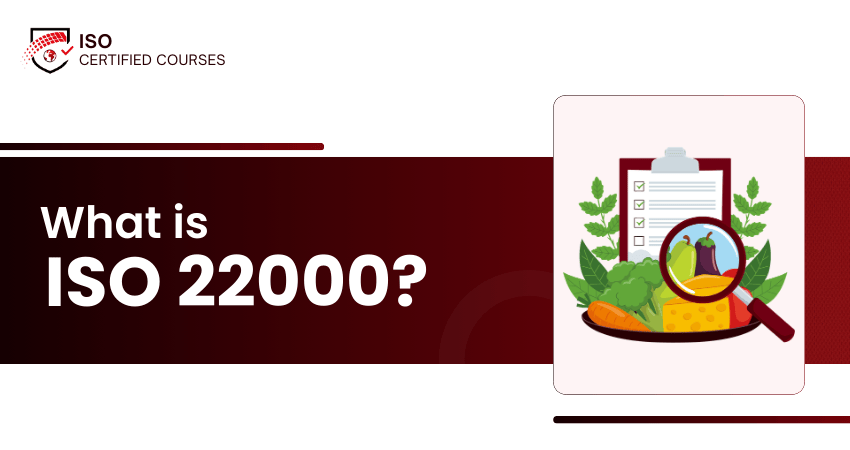
From farm to fork, food passes through multiple hands. But who ensures it stays safe at every step? In today’s global supply chain where all food items are sourced, processed, packaged, stored, and transported across regions, even a small gap in safety controls can create serious risks. That's where ISO 22000 offers the structure and clarity to manage food safety with confidence.
It helps organisations control food safety risks at every stage of production and distribution. In this blog, we will discuss what is ISO 22000, why it matters, its requirements, and how to achieve it. Let's get started!
What is ISO 22000?
ISO 22000 is an international standard that sets out the requirements for a Food Safety Management System (FSMS). The current version, ISO 22000:2018, helps organisations ensure that food is safe at every stage of the supply chain. It is applicable to all types of businesses involved in food production, processing, packaging, storage, distribution, and related services.
ISO 22000 provides a clear framework for identifying food safety hazards, assessing risks, and implementing effective control measures. It integrates Hazard Analysis and Critical Control Points (HACCP) principles with a management system approach and follows the Plan-Do-Check-Act cycle to promote leadership, communication, risk-based thinking, and continual improvement.
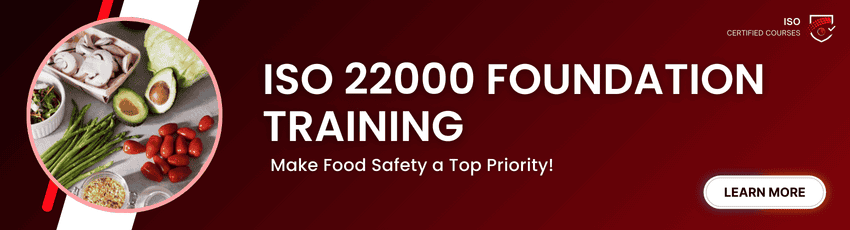
What is Food Safety Management System?
A Food Safety Management System is a structured system that organisations use to control food safety hazards and ensure products are safe for consumers. It includes certain processes, procedures, responsibilities, and controls that work together to prevent and reduce food safety risks.
The FSMS focuses on identifying possible dangers that could affect food. These dangers can be biological, such as bacteria; chemical, such as cleaning residues; or physical, such as foreign objects. Once these hazards are identified, the organisation puts controls in place to prevent or reduce them.
Why is ISO 22000 Important?
ISO 22000 is important because food safety is a critical responsibility for every organisation involved in the food chain. A single safety issue can harm a large number of consumers, especially if the product has already been distributed and used before it is recalled.
Such incidents can seriously damage a company’s reputation and lead to significant financial losses. Therefore, it becomes necessary to implement safety measures with ISO 22000 and avoid adding risk factors to your products.
The Requirements of ISO 22000
To achieve ISO 22000 compliance, organisations must meet several key requirements that ensure effective Food Safety Management. Those requirements include the following:
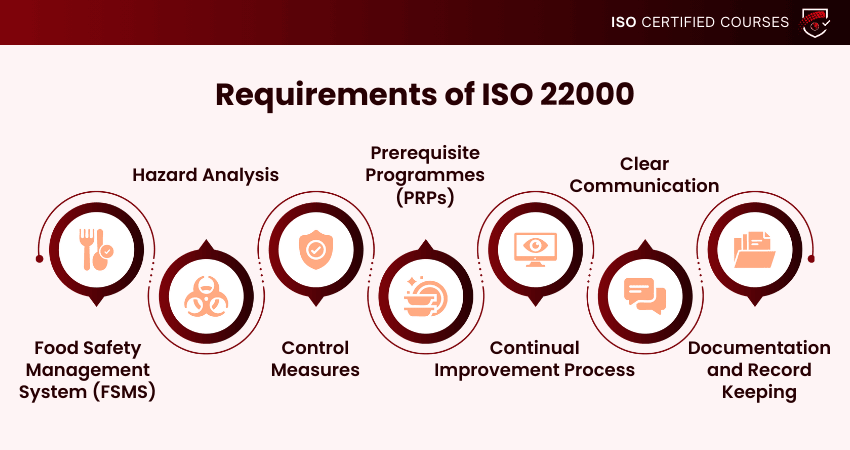
1) Food Safety Management System (FSMS)
The organisation is expected to develop, implement, maintain, and continually improve a documented Food Safety Management System.
2) Hazard Analysis
Businesses must identify biological, chemical, and physical hazards that could affect food safety and assess the risks associated with them. This can be done by following the guidelines of HACCP.
3) Control Measures
Appropriate controls must be established, including Critical Control Points (CCPs) and operational prerequisite programmes, to manage identified hazards.
Drive food safety excellence across your organisation with
ISO 22000 Lead Implementer Training
– Join today!
4) Prerequisite Programmes (PRPs)
Basic hygiene and operational conditions such as cleaning, pest control, maintenance, and supplier management are required to be properly maintained.
5) Continual Improvement Process
Organisations must regularly monitor processes, conduct internal audits, and verify that control measures are working effectively. This ensures the system remains effective and supports continual improvement.
6) Clear Communication
Effective internal and external communication must be maintained throughout the food supply chain. This ensures that food safety information, risks, and changes are clearly shared with employees, suppliers, customers, and other relevant stakeholders.
7) Documentation and Record Keeping
Organisations must maintain documented procedures, policies, and records to demonstrate compliance. Proper documentation ensures traceability, accountability, and evidence that food safety controls are implemented accordingly.
Key Steps to Get ISO 22000 Certification
Obtaining ISO 22000 Certification is a structured process that involves preparation, assessment, and ongoing compliance. Here’s how organisations can achieve certification:
1) Application Process
The initial step before applying for ISO 22000 Certification is the gap analysis. It means that organisations compare their current food safety practices against ISO 22000 requirements. This helps identify areas that need improvement. Here are the steps followed after that:
1) Next, the organisation develops and documents its Food Safety Management System.
2) This includes drafting policies, procedures, hazard analyses, control measures, and records.
3) Once the system is implemented, internal audits are conducted to verify readiness.
4) Management review meetings are also held to assess performance and ensure compliance.
After these steps, you need to choose an accredited certification body and formally apply for certification. Compliance audits and checks are conducted before providing the certification.
2) Assessment Process
In the assessment process, food safety audits are carried out. Usually, it will be in two stages:
1) Stage 1:
Auditors review documentation and evaluate whether the organisation is prepared for full assessment. They identify any gaps that must be addressed before the next stage.
2) Stage 2:
Auditors perform an on-site audit. They examine processes, review records, and observe operations to confirm that the FSMS is effectively implemented.
Strengthen your auditing skills and ensure food safety compliance with
ISO 22000 Internal Auditor Training
– Sign up soon!
3) Certification
Once all prerequisites are met, you will receive the ISO 22000 Certification. This certificate is typically valid for three years and demonstrates that your organisation operates a recognised and effective Food Safety Management System. At the end of the three-year cycle, a recertification audit is required to maintain your certified status.
Benefits of ISO 22000
Implementing ISO 22000 offers several benefits to the organisation. Those benefits include the following:
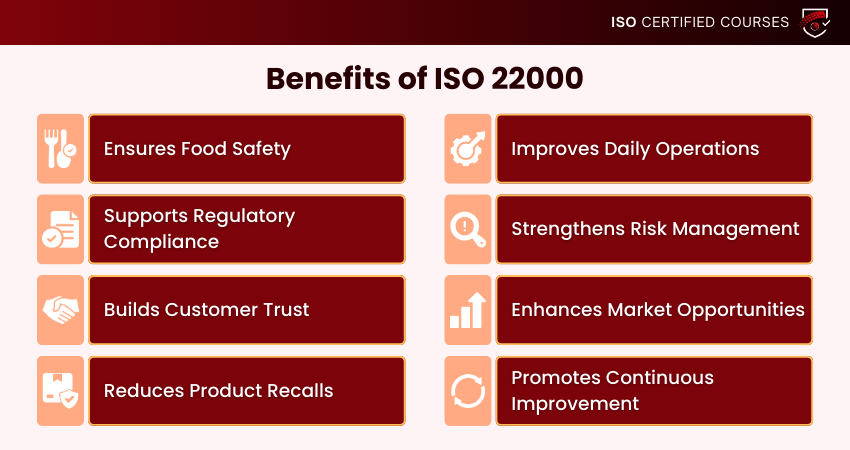
1) Ensures Food Safety:
ISO 22000 helps businesses control food safety risks from raw materials to the final product, reducing the chances of contamination.
2) Supports Regulatory Compliance:
It supports organisations in meeting legal food safety requirements and avoiding penalties or legal issues.
3) Builds Customer Trust:
Compliance with ISO 22000 shows that a company takes food safety seriously, which increases confidence among customers and business partners.
4) Reduces Product Recalls:
By preventing problems early, businesses can lower the risk of food product recalls, financial losses, and damage to their reputation.
5) Improves Daily Operations:
Clear procedures and defined responsibilities make work more organised and reduce mistakes.
6) Strengthens Risk Management:
It promotes identifying and managing risks before they become serious problems since it focuses on prevention rather than rectifying an issue.
7) Enhances Market Opportunities:
Many retailers and global companies prefer working with suppliers who are ISO 22000 compliant, which can help businesses grow.
8) Promotes Continuous Improvement:
Regular reviews and audits help organisations keep improving their food safety system over time.
Conclusion
ISO 22000 is a strategic framework that embeds food safety into the core of organisational operations. Combining hazard control with strong management practices helps businesses produce safe food, meet regulatory requirements, and improve daily operations. Organisations that adopt this standard position themselves as reliable and quality-focused, ready to deliver safe food products with confidence.
Ready to improve food safety standards in your workplace? Register for
ISO 22000 Training
now.
Search Smarter
Quickly search through our blog content for what interests you
- Top ISO 9001 Internal Audit Questions and Answers in 2026
- ISO 27005 vs ISO 31000: How to Choose the Right Risk Framework
- Challenges of ISO 14001 and How to Overcome Them
- Top 14 Benefits of ISO 45001 Certification
- What are the ISO 27001 Requirements: A Complete 2026 Guide
- 12 Benefits of ISO 27001 Certification for Business
- ISO 27001 vs ISO 27002: Key Difference and Uses Cases
- ISO 17025 vs ISO 9001: Key Differences and Similarities
- ISO 45001 Requirements for Occupational Health & Safety
- ISO 9001, 14001, and 45001: Key Differences and Similarities
- ISO 27001 vs SOC 2: Understanding Key Differences
- ISO 17025 Requirements: Explained in Detail
- What is ISO 27001 Gap Analysis? A Complete Overview
- ISO 17025: An Overview of Laboratory Accreditation
- What is ISO 27001: An Overview of the Information Security Standard
- ISO 27001 Controls from Annex A: What Changed in ISO 27001:2022?
- What is ISO 50001: Meaning, Requirements & Clauses Explained
- Top 10 Benefits of ISO 50001: A Detailed Explanation
- What is a Quality Management System (QMS): A Comprehensive Overview
- What is the Statement of Applicability (SoA) in ISO/IEC 27001?
- What is ISO 31000? The Risk Management Standard Explained
- What Is ISO 13485? Understanding Its 8 Key Sections
- ISO 56000: A Comprehensive Guide to Innovation Management
- What is ISO 14064? Components, Execution, and Benefits Explained
- Carbon Footprint: Definition, Types, and How to Calculate It
- ISO 22301: Requirements, Benefits and How to Implement It?
- ISO 9001 vs ISO 9002: Key Differences You Should Know
- Carbon Accounting: Meaning, Benefits, and Challenges
- Ecological Footprint: Meaning, Importance, and Purpose
- Compliance Management System: Components and How to Implement
- What is Competency Management? Benefits, Tips and Best Practices
- ISO 9001 and 27001: Quality Management vs Information Security Management
- ISO 27001 Annex A Controls: Everything You Need to Know
- ISO 27001 Audit: A Complete Guide to the Audit Process
- ISO 9001 vs ISO 14001: Key Differences and Similarities
No match found
Frequently Asked Questions
No FAQs available for this blog.