



What is ISO 27001: An Overview of the Information Security Standard
ISO 27001 is an international standard for establishing, implementing, maintaining, and continually improving an Information Security Management System. It provides a clear framework to identify threats and apply controls to protect information. This supports compliance, trust, and business resilience across organisations of all sizes.

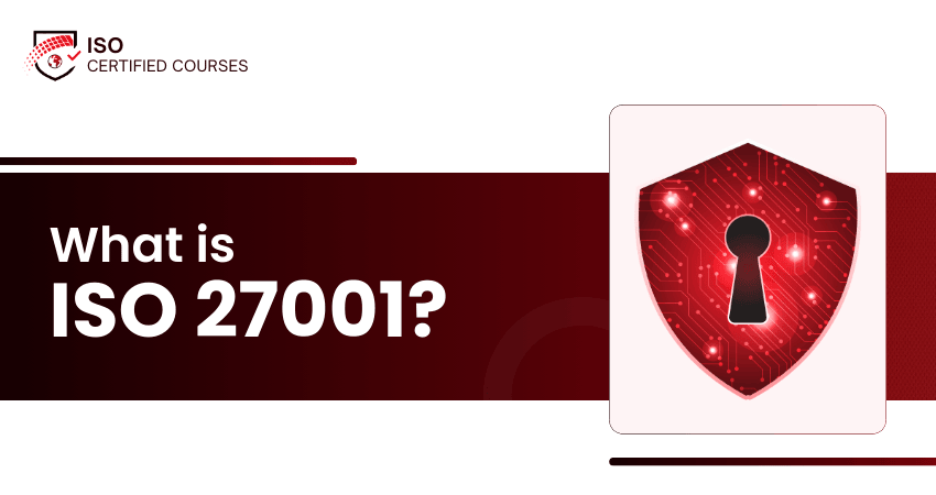
Every organisation holds information it cannot afford to lose, from customer data and financial records to employee details and business plans. With cyber threats increasing and mistakes happening easily, even a small security gap can turn into a major problem. Protecting information is no longer just an IT task; it is a responsibility that affects trust, reputation, and business survival.
To address these growing information security challenges, organisations need a structured and reliable approach. This blog explains What is ISO 27001, why it is important, how it works, and the principles behind information security. Read ahead to learn how ISO 27001 supports consistent and effective protection of organisational information.
What is ISO 27001?
ISO 27001 is a globally recognised standard that helps organisations establish, implement, maintain, and continually advance an Information Security Management System (ISMS). It provides a structured way to manage sensitive information by aligning people, processes, and technology to protect data confidentiality, integrity and availability.
This risk-based framework applies to organisations of all sizes and industries. It helps identify and reduce information security risks, protect assets from cyber threats, support compliance with regulations such as GDPR, and demonstrate a clear commitment to information security for customers and stakeholders.
Why is ISO 27001 Important?
Information security threats are increasing in number and complexity. Cybercrime, human error, system failures and insider threats can all lead to data loss or misuse. ISO 27001 is important because it helps organisations manage these risks in a structured way.
ISO 27001 is important because it:
a) Protects sensitive information from unauthorised access
b) Reduces the risk of data breaches and security incidents
c) Supports compliance with legal and governing requirements
d) Builds trust with clients, partners, and stakeholders
e) Improves business resilience and continuity
The Principles of ISO 27001
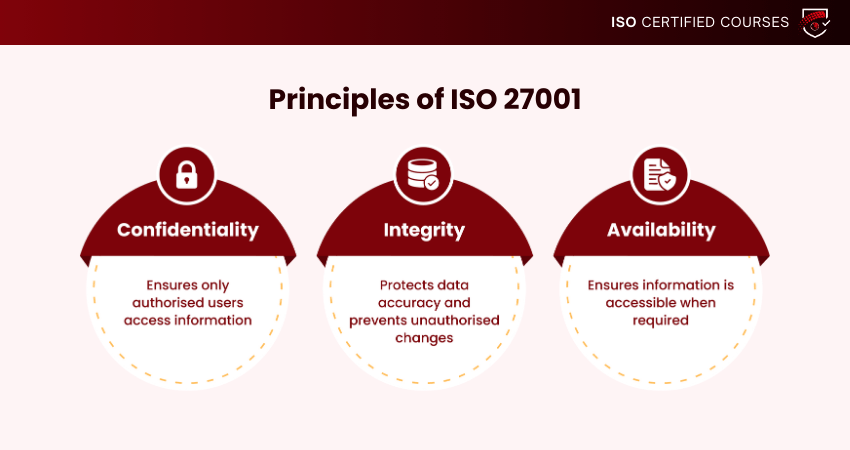
ISO 27001 is built around three core principles of information security, often referred to as the CIA triad.
1) Confidentiality:
Confidentiality ensures that information is only accessible to authorised people. This includes controls such as access permissions, passwords, encryption and user authentication.
2) Integrity:
Integrity makes sure that information is accurate, complete, and not altered without authorisation. Controls such as version control, audit logs, and change management help maintain data integrity.
3) Availability:
Availability ensures that information is accessible when needed. This includes backup systems, disaster recovery plans, and protection against system failures or cyberattacks.
How Does ISO 27001 Work?
ISO 27001 helps organisations manage information security through a structured, risk-based ISMS, combining people, processes, and controls. The sections below explain how this framework is applied in practice, step by step.
Step 1: Define the ISMS Scope
The organisation clearly defines what the ISMS will cover. This may include the entire organisation or specific areas such as departments, systems, locations, or services. A clear scope ensures responsibilities and risks are properly managed.
Step 2: Identify Information Assets and Risks
The organisation identifies information assets such as data, systems, and documents. It then assesses risks by analysing potential threats, vulnerabilities, and the impact of security incidents. This risk assessment forms the foundation of ISO 27001.
Step 3: Decide Risk Treatment and Controls
Based on the risk assessment, the organisation decides how to treat each risk. This may involve reducing, avoiding, transferring, or accepting risks. Appropriate security controls are selected using ISO 27001 Annex A as guidance.
Step 4: Establish Policies and Procedures
To support the selected controls, the organisation documents information security policies, procedures, roles, and responsibilities. These documents define how security is managed and ensure consistent behaviour across the organisation.
Step 5: Implement Security Controls
The organisation puts controls into practice. This may include access controls, encryption, backup processes, incident response procedures, monitoring systems and employee awareness training.
Step 6: Monitor, Audit and Review
ISO 27001 requires ongoing monitoring of security performance. Organisations track incidents, measure control effectiveness, conduct internal audits, and review risks regularly to ensure the ISMS remains effective.
Step 7: Continual Improvement
ISO 27001 follows the Plan-Do-Check-Act (PDCA) cycle. Findings from audits, incidents, and reviews are used to improve controls and processes. This ensures information security evolves as threats and business needs change.
Step 8: Certification (Optional)
Organisations mhttps://chat.openai.com/chat
ISO 27001 controls are safeguards used to reduce information security risks. These controls are listed in Annex A of ISO/IEC 27001:2022 and cover a vast range of security areas.
Controls are selected based on risk assessment and risk treatment results. Not all controls are mandatory; organisations choose the ones that are relevant to their identified risks and business context.
Categories of ISO 27001 Controls
The categories of ISO 27001 controls group security measures based on how they protect information and manage risks. These controls are organised into different key areas, each addressing a different aspect of information security, as explained below:
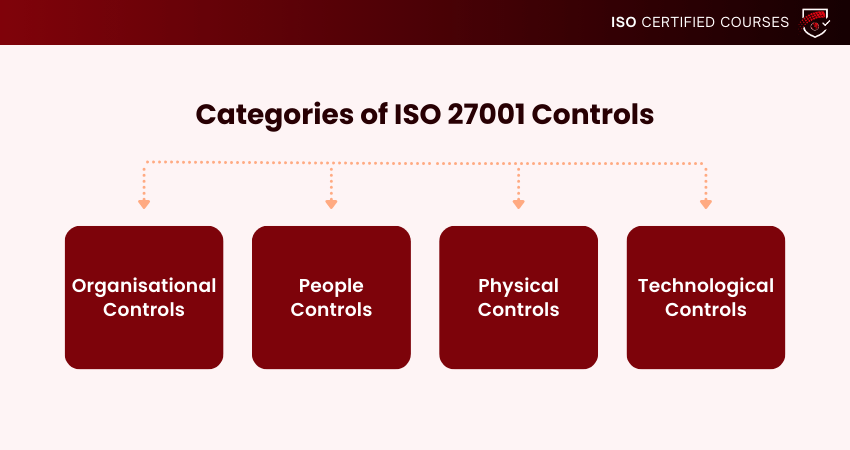
1) Organisational Controls
Organisational controls focus on governance, policies, and management practices that guide how information security is handled across the organisation. These controls establish accountability and integrate security into everyday operations.
Examples Include:
1) Information security policies
2) Risk management and governance processes
3) Supplier and third-party security management
4) Incident response planning
5) Business continuity arrangements
2) People Controls
People control address risks related to human behaviour, awareness, and responsibility. They help reduce errors, misuse of information, and insider threats by promoting secure practices.
Examples Include:
1) Information security awareness and training
2) Clearly defined roles and responsibilities
3) Background checks where appropriate
4) Disciplinary procedures
5) Secure onboarding and offboarding processes
3) Physical Controls
Physical controls protect facilities, equipment, and environments where information is stored or processed. These controls prevent unauthorised physical access that could lead to data loss or compromise.
Examples Include:
1) Controlled access to offices and secure areas
2) Visitor management procedures
3) CCTV and surveillance systems
4) Protection of equipment and infrastructure
5) Secure disposal of hardware and media
4) Technological Controls
Technological controls use technical measures to protect information systems, networks, and data. They help defend against cyber threats and ensure systems operate securely.
Examples Include:
1) User authentication and access controls
2) Data encryption
3) Network and system security protections
4) Activity monitoring and logging
5) Malware protection and cyber attack prevention
Gain essential ISO 27001 implementation expertise to build and improve secure information systems confidently. Join our
ISO 27001 Lead Implementer Training
now!
ISO 27001 Clauses Explained
ISO 27001 clauses define the core requirements for establishing, implementing, maintaining, and continually improving an effective ISMS. They provide a structured framework that organisations follow to manage information security systematically and consistently, as outlined below.
Clause 4: Context of the Organisation
This clause requires organisations to understand their internal and external context. It involves identifying stakeholders, legal requirements, and the scope of the ISMS. This ensures information security objectives align with business goals and external obligations. It also helps organisations focus security efforts on what truly matters to their operations.
Clause 5: Leadership
Leadership commitment is critical. This clause requires top management to support the ISMS, define roles, and establish an information security policy. Strong leadership ensures accountability and drives a security-focused culture across the organisation. Without leadership involvement, the ISMS cannot be effectively implemented or sustained.
Clause 6: Planning
Planning focuses on risk assessment and risk treatment. Organisations must identify risks and decide how to address them using suitable controls. This proactive approach helps prevent incidents before they occur. It ensures risks are managed consistently rather than reactively.
Clause 7: Support
This clause covers resources, competence, awareness, communication, and documented information. It ensures the ISMS is adequately supported and maintained. Effective support enables personnel to understand their responsibilities and apply security controls correctly in daily activities.
Clause 8: Operation
Clause 8 focuses on implementing and operating the ISMS. This includes applying controls, managing changes, and handling incidents. It ensures security measures work consistently in day-to-day operations. This clause turns security plans into practical, repeatable actions.
Clause 9: Evaluation
Evaluation involves monitoring, measurement, internal audits, and management reviews to assess ISMS performance. This helps identify gaps and ensures the ISMS remains effective and compliant. Regular evaluation supports informed decision-making and continuous oversight.
Clause 10: Improvement
This clause focuses on continual improvement. Organisations must address non-conformities and improve their information security practices over time. Continuous improvement helps adapt to new risks and change business needs. It ensures the ISMS evolves as threats, technologies, and business priorities change.
Advance your career with
ISO 27001 Internal Auditor Training
for real-world audit success.
What are the Benefits of ISO 27001?
ISO 27001 provides a structured approach to managing information security risks. Below are the key benefits of implementing an ISO 27001:
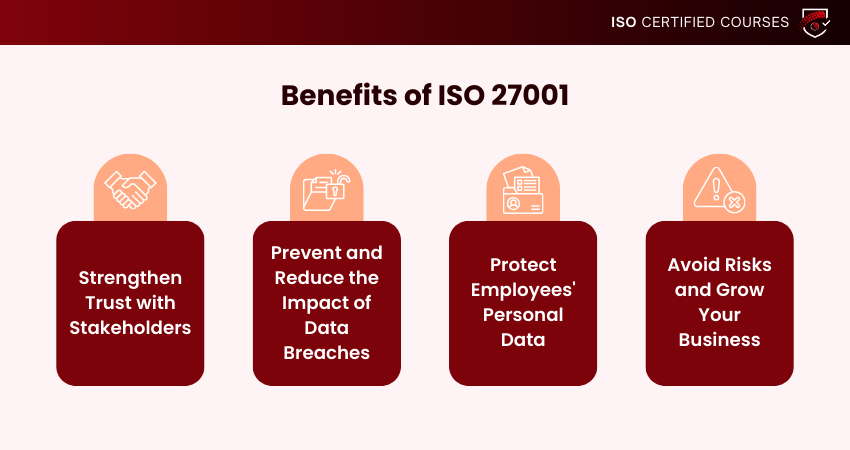
1) Strengthen Trust with Stakeholders
ISO 27001 Certification shows customers, partners, and regulators that information security is taken seriously. It demonstrates a clear commitment to protecting data, which helps build trust and reinforce business relationships.
2) Prevent and Reduce the Impact of Data Breaches
By identifying risks early and applying suitable controls, ISO 27001 helps prevent security incidents. If a breach does occur, the standard ensures processes are in place to respond quickly and reduce damage.
3) Protect Employees' Personal Data
ISO 27001 helps safeguard sensitive employee information such as payroll, contact details, and personal records. This supports privacy obligations and reduces the risk of internal data misuse.
4) Avoid Risks and Grow Your Business
Effective information security reduces operational risks and downtime. ISO 27001 also improves business credibility, making it easier to win new clients, enter new markets, and support sustainable growth.
Conclusion
ISO 27001 provides a practical and reliable approach to protecting sensitive information in a growing digital world. Understanding What is ISO 27001 helps organisations manage security risks, meet compliance requirements, and build stakeholder trust. By adopting this standard, businesses can strengthen resilience, improve security practices, and support long-term growth with confidence.
Boost your career with globally recognised
ISO 27001 Training
to secure data and drive compliance success.
Search Smarter
Quickly search through our blog content for what interests you
- Top ISO 9001 Internal Audit Questions and Answers in 2026
- ISO 27005 vs ISO 31000: How to Choose the Right Risk Framework
- Challenges of ISO 14001 and How to Overcome Them
- Top 14 Benefits of ISO 45001 Certification
- What are the ISO 27001 Requirements: A Complete 2026 Guide
- 12 Benefits of ISO 27001 Certification for Business
- ISO 27001 vs ISO 27002: Key Difference and Uses Cases
- ISO 17025 vs ISO 9001: Key Differences and Similarities
- ISO 45001 Requirements for Occupational Health & Safety
- ISO 9001, 14001, and 45001: Key Differences and Similarities
- ISO 27001 vs SOC 2: Understanding Key Differences
- ISO 17025 Requirements: Explained in Detail
- What is ISO 27001 Gap Analysis? A Complete Overview
- ISO 17025: An Overview of Laboratory Accreditation
- ISO 27001 Controls from Annex A: What Changed in ISO 27001:2022?
- What is ISO 50001: Meaning, Requirements & Clauses Explained
- Top 10 Benefits of ISO 50001: A Detailed Explanation
- What is a Quality Management System (QMS): A Comprehensive Overview
- ISO 22000: Food Safety Management System Explained
- What is the Statement of Applicability (SoA) in ISO/IEC 27001?
- What is ISO 31000? The Risk Management Standard Explained
- What Is ISO 13485? Understanding Its 8 Key Sections
- ISO 56000: A Comprehensive Guide to Innovation Management
- What is ISO 14064? Components, Execution, and Benefits Explained
- Carbon Footprint: Definition, Types, and How to Calculate It
- ISO 22301: Requirements, Benefits and How to Implement It?
- ISO 9001 vs ISO 9002: Key Differences You Should Know
- Carbon Accounting: Meaning, Benefits, and Challenges
- Ecological Footprint: Meaning, Importance, and Purpose
- Compliance Management System: Components and How to Implement
- What is Competency Management? Benefits, Tips and Best Practices
- ISO 9001 and 27001: Quality Management vs Information Security Management
- ISO 27001 Annex A Controls: Everything You Need to Know
- ISO 27001 Audit: A Complete Guide to the Audit Process
- ISO 9001 vs ISO 14001: Key Differences and Similarities
No match found
Frequently Asked Questions
Who Should Implement ISO 27001?
ISO 27001 applies to any organisation handling sensitive data, especially in IT, finance, healthcare, and telecom. Its implementation requires organisation-wide involvement led by top management, with support from IT, legal, HR, and operations, as it is not just an IT project but a shared responsibility.
What is the Difference Between ISO 27001:2013 and ISO 27001:2022?
ISO 27001:2013 included 114 controls across 14 domains. ISO 27001:2022 updates this by reorganising them into 93 controls grouped into four themes and places greater emphasis on areas such as cloud services, threat intelligence, and remote working risks, rather than introducing entirely new control domains.
What are the Four Themes of ISO 27001?
Here are the four themes of ISO 27001:
a) Organisational: Policies, governance, and risk management
b) People: Roles, responsibilities, and awareness
c) Physical: Protection of facilities and assets
d) Technological: Technical security controls, like access and encryption