
























Carbon Footprint: Definition, Types, and How to Calculate It
A Carbon Footprint measures total greenhouse gas emissions, direct and indirect, from individuals, organisations, or products to assess environmental impact. It helps identify key emission sources and understand their effects. By measuring emissions, you can take steps to reduce them and support sustainability.

Ever noticed how your day is filled with small, routine actions, ordering food, commuting, charging devices, or streaming your favourite shows? It all feels normal. But behind these simple habits, greenhouse gases are quietly being released, adding to your Carbon Footprint without you even realising it. So, how do these everyday actions actually affect the environment around you?
This is where understanding What is Carbon Footprint becomes important. It helps you connect your daily choices to their environmental impact. In this blog, you will explore its meaning, types, key benefits, and how to calculate and reduce it using simple, practical best practices. Let’s explore this further!
What is Carbon Footprint?
A Carbon Footprint is the total amount of Greenhouse Gases (GHGs) released due to human activities. It shows the environmental impact of actions such as using energy, travelling, or producing goods.
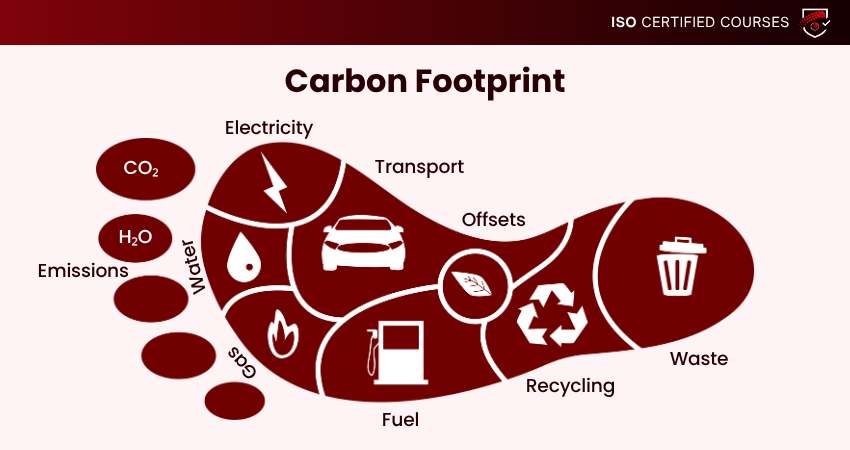
This includes both direct emissions, like fuel burned in vehicles, and indirect emissions from electricity use or manufacturing. These gases include Carbon Dioxide (CO₂), Methane (CH₄), Nitrous Oxide (N₂O), and other industrial gases such as Hydrofluorocarbons (HFCs).

Different Types of Carbon Footprints
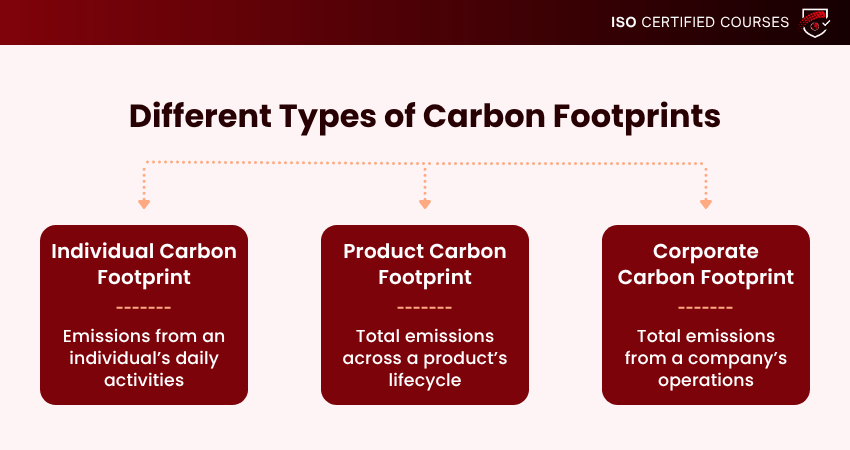
Carbon Footprints measure greenhouse gas emissions (GHGs) produced by individuals, organisations, or products. These emissions are grouped based on their source and responsibility, making it easier to understand where they come from and how they can be reduced. They are mainly divided into three common types:
1) Individual Carbon Footprint
An individual or personal Carbon Footprint refers to emissions generated by daily activities. This includes transportation such as driving or flying, energy used at home for heating and electricity, and lifestyle choices like food consumption.
For example, using a private car frequently or consuming high-energy products increases personal emissions. Making small changes, such as using public transport or reducing energy use, can help lower this footprint.
2) Product Carbon Footprint
A product Carbon Footprint looks at the total emissions generated throughout a product’s lifecycle. This includes raw material extraction, manufacturing, transportation, usage, and final disposal.
For example, producing a product involves energy and resources at every stage. Measuring these emissions helps businesses design more eco-friendly products and reduce their overall environmental impact.
3) Corporate Carbon Footprint
A corporate Carbon Footprint measures the total emissions produced by a company’s operations. This includes energy usage in offices or factories, business travel, production processes, and supply chain activities.
It helps organisations identify inefficiencies and improve sustainability. By managing emissions effectively, companies can reduce costs, meet regulations, and enhance their environmental responsibility.
How to Calculate a Carbon Footprint?
Calculating a Carbon Footprint involves measuring greenhouse gas emissions from activities such as energy use, transportation, food, and waste. These are converted into Carbon Dioxide equivalents (CO₂e) using emission factors.
The basic formula is: Activity Data × Emission Factor = Carbon Footprint. Online calculators can help simplify this process.
To calculate it effectively, follow these steps:
1) Define the Scope: Decide whether you are measuring an individual, household, or organisational footprint, focusing on areas like energy, travel, and consumption.
2) Collect Activity Data: Gather details such as electricity bills, fuel usage, travel distance, and waste generation.
3) Apply Emission Factors: Convert activity data into emissions using standard factors, such as emissions per unit of electricity or fuel.
4) Calculate Total Emissions: Add emissions from all categories to determine the total Carbon Footprint.
5) Review and Analyse: Identify the main sources of emissions and areas where reductions can be made.
This approach helps you understand your environmental impact and take practical steps to reduce it.
Develop skills to ensure accurate environmental data validation and assurance through the ISO 14065 Training – Register today!
What are the Benefits of Calculating Your Carbon Footprint?
Calculating your Carbon Footprint helps you understand your environmental impact, identify emission sources, and take targeted actions to reduce them. Key benefits of calculating a Carbon Footprint include:
1) Identifies High-impact Areas: Shows where emissions are highest, such as energy use, transport, or consumption.
2) Cost Savings and Efficiency: Helps reduce energy waste and lower operational costs.
3) Supports Targeted Strategies: Enables setting measurable goals and tracking progress towards sustainability targets.
4) Improves Reputation: Demonstrates environmental responsibility to customers, investors, and stakeholders.
5) Informed Decision-making: Provides data to make better choices in operations, sourcing, and investments.
6) Raises Awareness: Encourages individuals and organisations to adopt more sustainable behaviours.
What Emissions Should be Included in a Carbon Footprint?
A Carbon Footprint should include all greenhouse gas emissions linked to an individual, organisation, or product. These emissions are grouped into three categories to give a complete picture of environmental impact. They are commonly classified as follows:
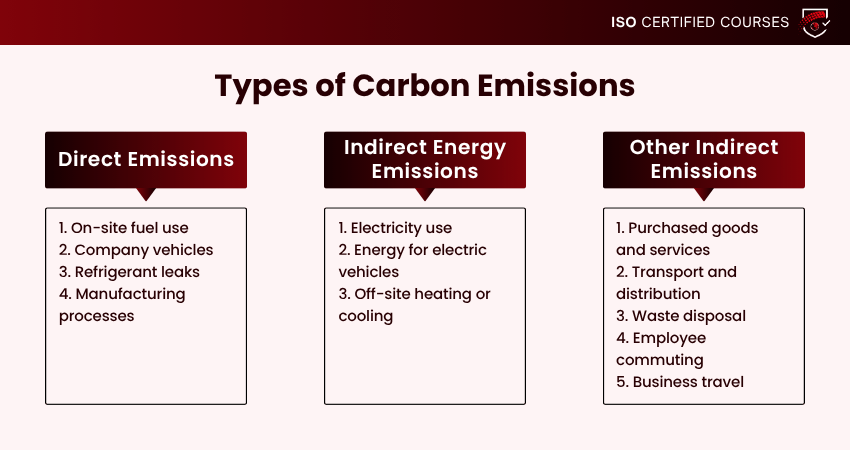
1) Scope 1 (Direct Emissions): These are emissions from sources that are owned or controlled, such as fuel used in company vehicles or gas burned for heating on-site.
2) Scope 2 (Indirect Energy Emissions): These come from purchased energy, such as electricity, steam, or heating, even though they are generated externally.
3) Scope 3 (Other Indirect Emissions): These include emissions outside direct control, such as business travel, supply chains, purchased goods and services, and waste.
Including all three scopes provides a comprehensive view of total emissions and helps identify key areas for effective reduction.
Learn ISO 14001 fundamentals to build effective environmental management systems through the ISO 14001 Foundation Training – Join today!
How Can You Reduce Your Carbon Footprint?
Reducing your Carbon Footprint involves making smarter choices in daily life, especially in how you use resources, energy, and transport. Small, consistent changes can significantly lower emissions over time. The following actions can help reduce your environmental impact:
1) Consume Local Seasonal Products
Buying local and seasonal products reduces emissions from transportation, storage, and processing. Locally sourced food requires less fuel to reach you, while seasonal produce avoids energy-intensive methods like refrigeration or greenhouse farming. This also supports local farmers and promotes sustainable consumption practices.
2) Use High Energy Efficiency Appliances
Energy-efficient appliances consume less electricity while delivering the same performance. Using devices with high energy ratings helps reduce energy consumption, lower utility costs, and minimise emissions from electricity generation. They also improve long-term energy savings and overall household efficiency.
3) Use Water and Electricity Efficiently
Using water and electricity wisely helps conserve resources and reduce emissions. Simple actions like turning off unused lights, fixing leaks, and limiting water usage can significantly lower energy demand and environmental impact. These habits also help reduce utility bills and resource wastage.
4) Use Responsible Transportation Whenever Possible
Choosing sustainable transport options such as walking, cycling, carpooling, or using public transport helps reduce fuel consumption and emissions. Reducing reliance on private vehicles, especially for short trips, can make a noticeable difference in your Carbon Footprint. It also helps ease traffic congestion and improves air quality.
Effective Carbon Footprint Tips and Best Practices
Reducing your Carbon Footprint is most effective when you combine daily actions with long-term strategies. By focusing on practical steps and structured approaches, you can achieve meaningful emission reductions. The following tips and best practices can help you get started:
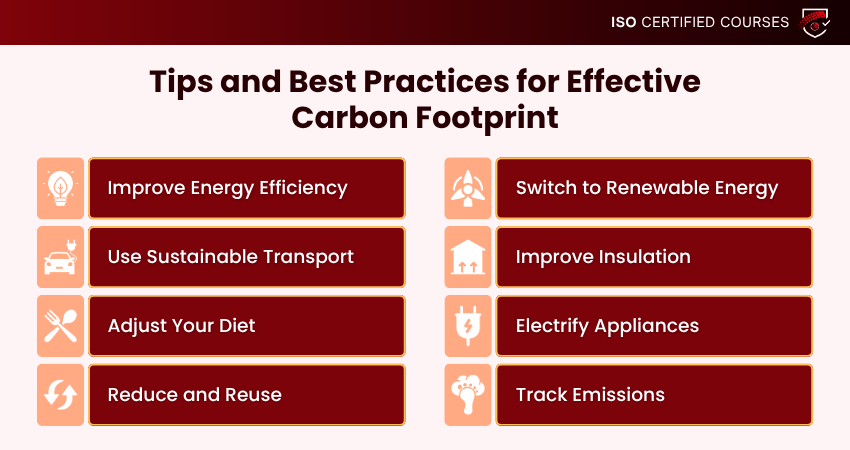
1) Improve Energy Efficiency: Use LED lighting, reduce energy consumption, and switch off unused devices.
2) Use Sustainable Transport: Walk, cycle, use public transport, or carpool where possible.
3) Adjust Your Diet: Reduce meat and dairy consumption, especially high-impact food products.
4) Reduce and Reuse: Buy less, avoid waste, and choose products with minimal packaging.
5) Optimise Daily Habits: Combine trips and reduce unnecessary energy consumption.
6) Switch to Renewable Energy: Use solar power or choose green energy providers.
7) Improve Insulation: Enhance building efficiency to reduce long-term energy use.
8) Electrify Appliances: Replace gas systems with electric alternatives such as heat pumps.
9) Track Emissions: Monitor energy and resource usage regularly.
10) Focus on High-impact Actions: Prioritise changes that deliver the greatest emission reductions.
Conclusion
In essence, understanding What is Carbon Footprint, it helps individuals and organisations measure their environmental impact and take meaningful steps to reduce emissions. By identifying key sources and applying best practices, it becomes easier to improve efficiency, support sustainability, and support a safe environment for future generations.
Learn ISO standards effectively to enhance business quality, safety, and efficiency with the ISO Training – Join now!
Search Smarter
Quickly search through our blog content for what interests you
- Top ISO 9001 Internal Audit Questions and Answers in 2026
- ISO 27005 vs ISO 31000: How to Choose the Right Risk Framework
- Challenges of ISO 14001 and How to Overcome Them
- Top 14 Benefits of ISO 45001 Certification
- What are the ISO 27001 Requirements: A Complete 2026 Guide
- 12 Benefits of ISO 27001 Certification for Business
- ISO 27001 vs ISO 27002: Key Difference and Uses Cases
- ISO 17025 vs ISO 9001: Key Differences and Similarities
- ISO 45001 Requirements for Occupational Health & Safety
- ISO 9001, 14001, and 45001: Key Differences and Similarities
- ISO 27001 vs SOC 2: Understanding Key Differences
- ISO 17025 Requirements: Explained in Detail
- What is ISO 27001 Gap Analysis? A Complete Overview
- ISO 17025: An Overview of Laboratory Accreditation
- What is ISO 27001: An Overview of the Information Security Standard
- ISO 27001 Controls from Annex A: What Changed in ISO 27001:2022?
- What is ISO 50001: Meaning, Requirements & Clauses Explained
- Top 10 Benefits of ISO 50001: A Detailed Explanation
- What is a Quality Management System (QMS): A Comprehensive Overview
- ISO 22000: Food Safety Management System Explained
- What is the Statement of Applicability (SoA) in ISO/IEC 27001?
- What is ISO 31000? The Risk Management Standard Explained
- What Is ISO 13485? Understanding Its 8 Key Sections
- ISO 56000: A Comprehensive Guide to Innovation Management
- What is ISO 14064? Components, Execution, and Benefits Explained
- ISO 22301: Requirements, Benefits and How to Implement It?
- ISO 9001 vs ISO 9002: Key Differences You Should Know
- Carbon Accounting: Meaning, Benefits, and Challenges
- Ecological Footprint: Meaning, Importance, and Purpose
- Compliance Management System: Components and How to Implement
- What is Competency Management? Benefits, Tips and Best Practices
- ISO 9001 and 27001: Quality Management vs Information Security Management
- ISO 27001 Annex A Controls: Everything You Need to Know
- ISO 27001 Audit: A Complete Guide to the Audit Process
- ISO 9001 vs ISO 14001: Key Differences and Similarities
No match found
Frequently Asked Questions
What are Examples of a Carbon Footprint?
It is the total amount of greenhouse gas emissions caused by activities of individuals, organisations, or products, measured in CO₂ equivalents. Examples include driving petrol vehicles, heating homes, using electricity, buying goods like clothing, and consuming meat and dairy products.
What is a Carbon Footprint in GCSE Terms?
In GCSE terms, a Carbon Footprint is the total amount of carbon dioxide and other greenhouse gases like methane released by human activities. It is measured in tonnes of CO₂ equivalents (CO₂e) and shows how everyday actions contribute to climate change.
What Contributes to 90% of an Event’s Carbon Footprint?
Attendee and exhibitor travel, especially air travel, contributes 70% to 90% of an event’s Carbon Footprint. Long-haul flights, ground transport, and related logistics generate most emissions, making travel the largest environmental impact in conferences, meetings, and large events.