
























What is ISO 27001 Gap Analysis? A Complete Overview
ISO 27001 Gap Analysis evaluates current Information Security practices against ISO 27001 requirements to identify gaps and needed improvements for compliance. It involves comparing your existing security measures (like policies, procedures, technology, and physical security) against ISO 27001 clauses (4-10) and Annex A controls.

Securing your organisation without a proper assessment is akin to trying to complete a complex puzzle without any knowledge of the missing pieces. That's where an ISO 27001 Gap Analysis steps in as your roadmap. Think of it as a health check for your Information Security system.
Essentially, it helps you spot all the weaknesses or vulnerabilities before they escalate into full-blown risks. In this blog, we’ll comprehensively break down what ISO 27001 Gap Analysis is, why it matters, and how it sets you on the path to certification success. So read on and stay ahead of ever-evolving risks!
What is an ISO 27001 Gap Analysis?
An ISO 27001 Gap Analysis assesses how closely an organisation’s existing Information Security practices is in sync with the requirements of ISO/IEC 27001. It highlights any gaps and weaknesses in controls and clarifies what must be improved before working towards ISO 27001 certification. This activity is usually undertaken at the start of the ISO 27001 implementation journey.
The outcome of this analysis is a detailed report that outlines the areas of non-compliance, partially implemented controls and current strengths. It acts as a roadmap for creating an implementation plan by defining the resources, timelines and effort needed to achieve compliance.
Why is Gap Analysis Important for ISO 27001?
A Gap Analysis is a critical step in achieving ISO 27001 compliance, as it helps organisations evaluate their current operations and understand what is required moving forward. It's important because:
1) It provides clear visibility into existing Information Security practices and identifies what must change to meet ISO 27001 requirements.
2) It helps organisations accurately pinpoint weaknesses and process gaps that need to be addressed or implemented.
3) Its use of structured checklists saves time and resources by eliminating guesswork.
4) It supports the development of a powerful internal Information Security Management System aligned with ISO standards.
5) This enables the delivery of a consistently trustworthy customer experience.
Key Components of a Gap Analysis
A practical ISO 27001 Gap Analysis depends on selecting the right areas to review. Focusing on these components helps quickly identify compliance gaps. Here are the things to include:
1) Scope Definition:
Clearly outline what is being assessed. This could include a specific department, system or the entire organisation.
2) Documentation Review:
Check that existing policies and procedures align with ISO 27001 requirements. Identify gaps in areas like access control and Risk Management.
3) Control Assessment:
Compare existing controls against ISO 27001 Annex A to uncover weaknesses.
4) Risk Assessment:
Rank the identified gaps based on their risk level and potential impact on sensitive information.
5) Stakeholder Engagement:
Work closely with relevant teams. This could include IT governance leads and Compliance Managers, to ensure findings are accurate.
6) Findings Report:
Document the gaps, Information Security risks and corrective actions in a detailed report. This'll serve as a clear roadmap towards a stronger security posture.
How to Get Started With ISO 27001 Gap Analysis?
Starting an ISO 27001 Gap Analysis is the ideal way to strengthen Information Security practices. With the right guidance and tools, organisations can achieve alignment with ISO 27001 requirements and improve overall operational resilience. Here's how you can get started:
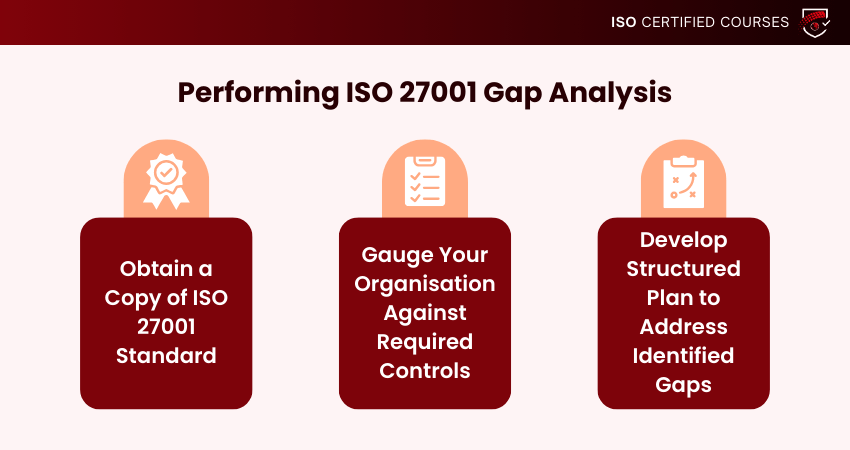
1) Obtain a Copy of ISO 27001 Standard
1) Download a copy of the ISO 27001 standard to establish a clear foundation for conducting a comprehensive Gap Analysis.
2) You can also use an ISO 27001 Gap Analysis template to support the process.
3) Take time to understand the standard, including the ISO 27001 Requirements and controls, thoroughly.
4) This knowledge is essential for accurately assessing your organisation’s current compliance level.
2) Gauge Your Organisation Against Required Controls
1) Assess your business objectives against the ISO 27001 controls to ensure alignment with recognised industry standards.
2) Review how each control is implemented, identifying gaps and areas for improvement.
3) This will boost operational efficiency and help gain a holistic view of your organisation’s current security posture.
3) Develop Structured Plan to Address Identified Gaps
1) Develop a structured plan to address identified gaps in compliance with ISO 27001 controls.
2) Define clear steps to implement the required safeguards and amplify Information Security practices.
3) Oversee timely execution of the plan to maintain reliability, effectiveness and long-term organisational success.
Become the go-to Architect of ISO 27001 compliance through our ISO 27001 Lead Implementer Training - Sign up now!
How Often is the ISO 27001 Gap Analysis Conducted?
An ISO 27001 Gap Analysis is typically conducted at the start of the implementation phase. It can also be repeated periodically, such as annually or before major audits. This helps review compliance, monitor progress and identify new security gaps.
Conducting regular gap analyses also supports continuous improvement of the Information Security Management System (ISMS). As organisations adopt new technologies, face emerging threats, or undergo structural changes, fresh gaps may appear. Reassessing periodically ensures security controls remain effective, relevant, and aligned with ISO 27001 requirements.
What Comes After the Gap Analysis?
Completing the Gap Analysis is only the first step. The real progress occurs when you act on the findings. These are the post-analysis steps to take:
1) Develop a Corrective Action Plan
1) Convert the ISO 27001 Gap Analysis findings into a structured roadmap for achieving ISO 27001 compliance.
2) Record all the identified issues, including missing policies, weak controls and nonconformities with Annex A requirements.
3) Address the underlying causes of gaps rather than applying temporary fixes through Root Cause Analysis (RCA).
4) Focus first on high-risk areas, such as weaknesses affecting sensitive data or outdated access controls.
5) Allocate responsibility to specific teams or individuals. This can include IT for technical controls and compliance teams for policy updates.
6) Define realistic timelines by accounting for task dependencies. This'll help ensure that the corrective actions remain on schedule.
2) Implement Changes and Controls
1) Provide teams with the necessary time, tools and budget to address identified gaps.
2) Focus on critical gaps to reduce risk and minimise potential security vulnerabilities.
3) Standardise how the updates are implemented, including policy revisions, control improvements and staff training.
4) Share the updates clearly across teams and departments to ensure consistent execution.
5) Regularly track the actions against the corrective action plan to ensure that changes remain on schedule and effective.
3) Undergo an Internal Audit
1) Conduct an internal audit to evaluate readiness and refine processes before an external audit takes place.
2) Review documentation, test implemented controls and confirm that the teams clearly understand their roles and responsibilities.
3) Address any newly identified gaps immediately to keep compliance strong.
4) Collaborate with leadership, IT teams and Compliance Officers to review the findings and support a smooth certification journey.
Build the bedrock of Information Security with our
ISO 27001 Foundation Training
- Sign up now!
Benefits of an ISO 27001 Gap Analysis
The re are plenty of Benefits of ISO 27001 Gap Analysis:
1) Supports Strategic Planning:
It delivers a proper action plan for allocating resources efficiently and setting realistic timelines.
2) Identifies Security Weaknesses:
It reveals inadequate controls, thus allowing organisations to address vulnerabilities before they escalate.
3) Saves Time and Resources:
It focuses the effort on areas that need improvement, thus avoiding unnecessary work on controls that already meet requirements.
4) Improves Certification Readiness:
It acts as a trial run for the ISO 27001 audit by highlighting gaps that can be resolved in advance.
5) Strengthens Risk Management:
It aligns Information Security controls with business risks, thus ensuring protection measures remain relevant and effective.
6) Builds Internal Awareness:
It increases understanding of ISO 27001 requirements and clarifies individual responsibilities across the organisation.
7) Showcases Due Diligence:
It shows customers, partners and regulators a clear commitment to information protection and international best practices.
Common Challenges in ISO 27001 Gap Analysis
Even the best-planned ISO 27001 Gap Analysis is not without challenges. Here are the most common obstacles you might experience:
1) Lack of Internal Expertise
1) Conducting an ISO 27001 Gap Analysis requires in-depth knowledge of the standard and its practical application within the organisation.
2) A lack of internal expertise can result in overlooked gaps or ineffective actions.
3) Engaging certified ISO 27001 consultants can provide expert guidance.
4) This is particularly useful for organisations that are new to the standard or dealing with complex compliance requirements.
2) Scoping
1) Clearly defining the scope is essential because an overly broad scope can weaken the effectiveness of an ISO 27001 Gap Analysis.
2) Including irrelevant areas may cause critical processes, systems or assets to be overlooked.
3) Avoid assessing unrelated functions, inactive systems or locations that do not handle information.
4) This can dilute focus and divert resources from priority areas.
3) Inadequate Documentation or Outdated Practices
1) Outdated or incomplete documentation can undermine an ISO 27001 Gap Analysis by leading to flawed assumptions.
2) Prioritise collecting and updating the documentation that directly support ISO 27001 compliance.
3) This could include the Statement of Applicability (SoA), access control policies, incident records and Risk Assessments.
4) Make sure all the documentation reflects current security practices and aligns with the organisation’s actual operations.
Conclusion
ISO 27001 Gap Analysis is your blueprint for building a resilient security framework. By uncovering gaps early on, you can transform compliance from a challenge into a strategic advantage. It's all about bridging the distance between where you are and where you need to be in the realm of Information Security.
Sign up for our
ISO 27001 Training
and lead the way in Information Security - join today!
Search Smarter
Quickly search through our blog content for what interests you
- Top ISO 9001 Internal Audit Questions and Answers in 2026
- ISO 27005 vs ISO 31000: How to Choose the Right Risk Framework
- Challenges of ISO 14001 and How to Overcome Them
- Top 14 Benefits of ISO 45001 Certification
- What are the ISO 27001 Requirements: A Complete 2026 Guide
- 12 Benefits of ISO 27001 Certification for Business
- ISO 27001 vs ISO 27002: Key Difference and Uses Cases
- ISO 17025 vs ISO 9001: Key Differences and Similarities
- ISO 45001 Requirements for Occupational Health & Safety
- ISO 9001, 14001, and 45001: Key Differences and Similarities
- ISO 27001 vs SOC 2: Understanding Key Differences
- ISO 17025 Requirements: Explained in Detail
- ISO 17025: An Overview of Laboratory Accreditation
- What is ISO 27001: An Overview of the Information Security Standard
- ISO 27001 Controls from Annex A: What Changed in ISO 27001:2022?
- What is ISO 50001: Meaning, Requirements & Clauses Explained
- Top 10 Benefits of ISO 50001: A Detailed Explanation
- What is a Quality Management System (QMS): A Comprehensive Overview
- ISO 22000: Food Safety Management System Explained
- What is the Statement of Applicability (SoA) in ISO/IEC 27001?
- What is ISO 31000? The Risk Management Standard Explained
- What Is ISO 13485? Understanding Its 8 Key Sections
- ISO 56000: A Comprehensive Guide to Innovation Management
- What is ISO 14064? Components, Execution, and Benefits Explained
- Carbon Footprint: Definition, Types, and How to Calculate It
- ISO 22301: Requirements, Benefits and How to Implement It?
- ISO 9001 vs ISO 9002: Key Differences You Should Know
- Carbon Accounting: Meaning, Benefits, and Challenges
- Ecological Footprint: Meaning, Importance, and Purpose
- Compliance Management System: Components and How to Implement
- What is Competency Management? Benefits, Tips and Best Practices
- ISO 9001 and 27001: Quality Management vs Information Security Management
- ISO 27001 Annex A Controls: Everything You Need to Know
- ISO 27001 Audit: A Complete Guide to the Audit Process
- ISO 9001 vs ISO 14001: Key Differences and Similarities
No match found
Frequently Asked Questions
No FAQs available for this blog.