





















ISO 56000: A Comprehensive Guide to Innovation Management
ISO 56000 provides a framework for managing innovation within organisations to develop processes, boost creativity, and turn ideas into valuable outcomes. It helps align innovation with business strategy, improve decision-making, and support continuous improvement. It supports sustainable growth while adapting to changing market needs.

Is your organisation full of ideas but lacking a clear way to turn them into results? It is a common challenge. Teams brainstorm, concepts emerge, but without structure, many of those ideas never move beyond discussion. Over time, this leads to missed opportunities and slow progress. This is exactly where ISO 56000 becomes valuable.
It offers a clear framework to help organisations manage innovation, ensuring that ideas are not just created but also developed, implemented, and aligned with business goals. In this blog, we will explore what is ISO 56000, its core concepts and principles, along with its benefits, and how it helps organisations inculcate innovation effectively. Let’s get started!
What is ISO 56000?
ISO 56000 is an international standard that provides a structured framework for the Innovation Management System (IMS). It provides a clear understanding of the key concepts, principles, and terms related to innovation, helping organisations manage it in a more structured and effective way.
The standard acts as a foundation for the ISO 56000 family. While it explains what Innovation Management is, other standards like ISO 56002 provide guidance on how to implement it. Overall, ISO 56000 helps organisations build a strong base for consistent and sustainable innovation.
What is Included in ISO 56000?
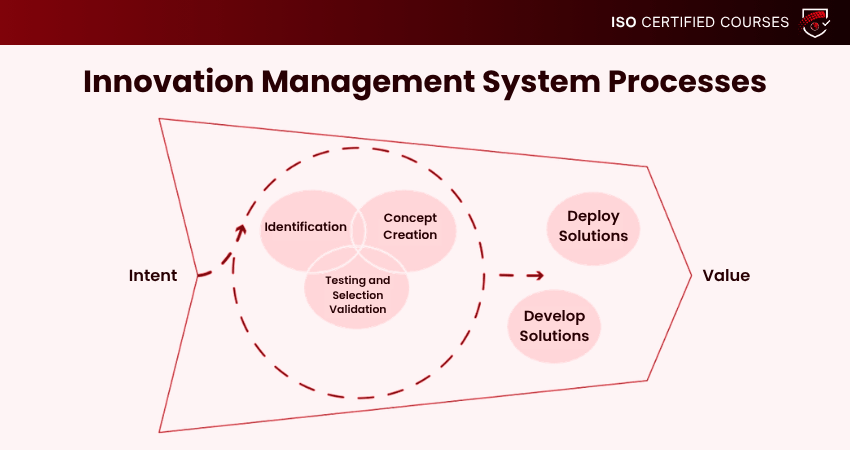
ISO 56000 helps organisations understand the basics of Innovation Management by explaining key terms, ideas, and principles. However, it is not just one standard. It is part of a larger ISO 56000 family, which includes several guidelines that help organisations understand, implement, assess, and manage innovation.
At its core, ISO 56000 focuses on building a common language and understanding of innovation. Along with this, the series includes other standards that support different parts of Innovation Management. Those are listed below:
1) ISO 56000:2020 – Fundamentals and Vocabulary:
This standard explains the basic concepts, principles, and terms of innovation, helping organisations create a shared understanding and avoid confusion.
2) ISO 56001 – IMS Requirements:
This standard sets out the requirements for establishing and improving an Innovation Management System.
3) ISO 56002:2019 – IMS Guidance:
It provides practical advice on how to manage innovation, including processes and how to involve employees and stakeholders.
4) ISO 56003:2019 – Innovation Partnerships:
It offers guidance on identifying, building, and managing innovation partnerships, helping organisations collaborate effectively with external partners.
5) ISO 56004:2019 – Innovation Management Assessment:
This standard explains how organisations can assess their current innovation performance, identify gaps, and find areas for improvement.
6) ISO 56005:2020 – Intellectual Property Management:
This standard provides guidance on managing and protecting intellectual property, ensuring that innovative ideas and assets are safeguarded.
7) ISO 56006 – Strategic Intelligence Management:
This standard focuses on using market insights, trends, and external knowledge to support innovation and informed decision-making.
8) ISO 56007 – Idea Management:
This standard guides organisations on how to identify opportunities, develop ideas, and validate them effectively.
9) ISO 56008 – Innovation Measurement:
This standard helps organisations measure innovation performance and return on investment using appropriate metrics at different stages.
Core Concepts and Principles of ISO 56000
To understand ISO 56000 effectively, it is important to look at its main ideas and principles. Here are some of the core concepts and principles:
1) Understanding Innovation
Many people think innovation only means new ideas, but ISO 56000 explains it differently. Innovation is not just about thinking of something new. It is about using that idea in a way that creates value.
For example, having a new product idea is not enough. It becomes innovation only when it is developed, launched, and used successfully. This practical approach helps organisations focus on results instead of just creativity.
2) Innovation Management
Innovation Management refers to the systematic process of managing ideas, resources, and activities to achieve innovation outcomes. Instead of leaving it to chance, organisations create systems to manage ideas and turn them into results.
ISO 56000 encourages businesses to make innovation a part of their daily operations. It should not be limited to one team or department. Everyone in the organisation should be involved. By managing innovation properly, organisations can improve their chances of success.
3) Value Creation
A key idea in ISO 56000 is value creation. Innovation is useful only when it creates value. This value can be different for each organisation. For some businesses, value means profit. For others, it may mean better customer experience or improved efficiency.
ISO 56000 encourages organisations to clearly define what value means to them. This helps them focus on the right innovation activities and avoid wasting resources. It also ensures that these efforts are aligned with overall business goals.
4) Strategic Alignment
For innovation to be effective, it must align with the organisation’s overall strategy. ISO 56000 highlights the importance of integrating innovation into business objectives rather than treating it as a separate function.
This involves linking innovation goals to strategic priorities, ensuring leadership support, and proper usage of available resources. When innovation is strategically aligned, it becomes a driver of growth and competitive advantage rather than a disconnected activity.
5) Ongoing Improvement
Innovation is not something that happens once. It is a continuous process. ISO 56000 encourages organisations to keep learning and improving. This involves regularly reviewing systems to identify what is working well and what needs improvement.
Moreover, continuous improvement helps businesses stay flexible and adapt to changes in the market. It ensures that innovation efforts stay relevant over time while also fostering a culture of learning and encouraging continuous innovation across teams.
Empower your team to drive consistent innovation with
ISO 56002 Innovation Management System Training
– Join now!
Why ISO 56000 Matters for Total Innovation?
ISO 56000 plays an important role in supporting total innovation, where innovation is not limited to a single department but becomes part of the entire organisation. Instead of relying only on research or leadership teams, it encourages everyone to contribute ideas and participate in innovation activities.
Total innovation also means encouraging collaboration across different teams and functions. ISO 56000 supports this by promoting shared understanding, better communication, and involvement at all levels. This leads to more diverse ideas and stronger solutions.
Benefits of Adopting ISO 56000 Standards
Adopting ISO 56000 can provide a wide range of benefits and the following are some of those benefits:
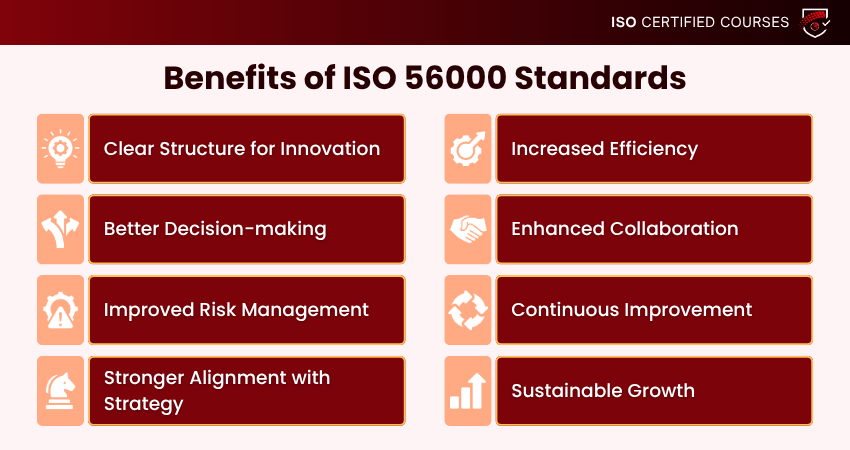
1) Clear Structure for Innovation: ISO 56000 provides a proper framework that helps organisations manage innovation in an organised and systematic way.
2) Better Decision-making: It supports informed decision-making by using clear processes to evaluate and select the most valuable ideas.
3) Improved Risk Management: The standard helps organisations identify and manage risks associated with innovation, reducing uncertainty and potential failures.
4) Stronger Alignment with Strategy: ISO 56000 ensures that innovation activities are closely linked to business goals, making them more purposeful and effective.
5) Increased Efficiency: It streamlines innovation processes, helping organisations develop and implement ideas more quickly and effectively.
6) Enhanced Collaboration: The framework promotes teamwork and communication across departments, leading to better innovation outcomes.
7) Continuous Improvement: ISO 56000 encourages organisations to regularly review and improve their innovation systems, ensuring long-term success.
8) Sustainable Growth:
It supports long-term growth by helping organisations create value consistently through innovation.
Limitations of ISO 56000 for Innovation
While ISO 56000 offers valuable guidance, it has its limitations. Understanding these limitations is essential for organisations considering its adoption. Those include:
1) Difficult to Measure Results: Innovation outcomes are not always easy to measure, making it harder to track performance and return on investment.
2) Resistance to Change: Employees and management may resist new processes or changes, which can slow down the adoption of ISO 56000 practices.
3) Risk of Over-structuring: Too much structure can limit creativity and flexibility, which are essential for innovation.
4) Delayed Results: The benefits of ISO 56000 may take time to become visible, requiring patience and long-term commitment.
5) Requires Strong Leadership Support:
Without active involvement and support from leadership, it can be difficult to implement and sustain innovation efforts.
Conclusion
ISO 56000 represents a significant step forward in how organisations approach innovation. Instead of relying on random ideas, it helps businesses create a clear system that supports creativity, aligns innovation with strategy, and focuses on delivering real value. When used effectively, it helps businesses build a culture of continuous improvement and stay adaptable in a rapidly changing market.
Turn your organisation’s ideas into real business value with ISO Courses – Sign up soon!
Search Smarter
Quickly search through our blog content for what interests you
- Top ISO 9001 Internal Audit Questions and Answers in 2026
- ISO 27005 vs ISO 31000: How to Choose the Right Risk Framework
- Challenges of ISO 14001 and How to Overcome Them
- Top 14 Benefits of ISO 45001 Certification
- What are the ISO 27001 Requirements: A Complete 2026 Guide
- 12 Benefits of ISO 27001 Certification for Business
- ISO 27001 vs ISO 27002: Key Difference and Uses Cases
- ISO 17025 vs ISO 9001: Key Differences and Similarities
- ISO 45001 Requirements for Occupational Health & Safety
- ISO 9001, 14001, and 45001: Key Differences and Similarities
- ISO 27001 vs SOC 2: Understanding Key Differences
- ISO 17025 Requirements: Explained in Detail
- What is ISO 27001 Gap Analysis? A Complete Overview
- ISO 17025: An Overview of Laboratory Accreditation
- What is ISO 27001: An Overview of the Information Security Standard
- ISO 27001 Controls from Annex A: What Changed in ISO 27001:2022?
- What is ISO 50001: Meaning, Requirements & Clauses Explained
- Top 10 Benefits of ISO 50001: A Detailed Explanation
- What is a Quality Management System (QMS): A Comprehensive Overview
- ISO 22000: Food Safety Management System Explained
- What is the Statement of Applicability (SoA) in ISO/IEC 27001?
- What is ISO 31000? The Risk Management Standard Explained
- What Is ISO 13485? Understanding Its 8 Key Sections
- What is ISO 14064? Components, Execution, and Benefits Explained
- Carbon Footprint: Definition, Types, and How to Calculate It
- ISO 22301: Requirements, Benefits and How to Implement It?
- ISO 9001 vs ISO 9002: Key Differences You Should Know
- Carbon Accounting: Meaning, Benefits, and Challenges
- Ecological Footprint: Meaning, Importance, and Purpose
- Compliance Management System: Components and How to Implement
- What is Competency Management? Benefits, Tips and Best Practices
- ISO 9001 and 27001: Quality Management vs Information Security Management
- ISO 27001 Annex A Controls: Everything You Need to Know
- ISO 27001 Audit: A Complete Guide to the Audit Process
- ISO 9001 vs ISO 14001: Key Differences and Similarities
No match found
Frequently Asked Questions
What are the Five Most Popular ISO Standards?
Some of the most widely used ISO standards across industries include:
1) ISO 56000: Innovation Management Systems
2) ISO 9001: Quality Management Systems
3) ISO 14001: Environmental Management Systems
4) ISO 27001: Information Security Management Systems
5) ISO 45001: Occupational Health and Safety Management Systems
What ISO 56000 Standard is Related to Innovation Partnerships?
ISO 56003 is the ISO standard related to innovation partnerships. It provides guidance on identifying, managing, and collaborating with external partners to support innovation and create shared value effectively.
What is the Difference Between ISO 56001 and 56002?
ISO 56001 and ISO 56002 serve different purposes within the Innovation Management framework. ISO 56001 focuses on requirements for establishing an Innovation Management System and is designed for certification. On the contrary, ISO 56002 provides practical guidance on implementing and maintaining that system.