














Top 10 Benefits of ISO 50001: A Detailed Explanation
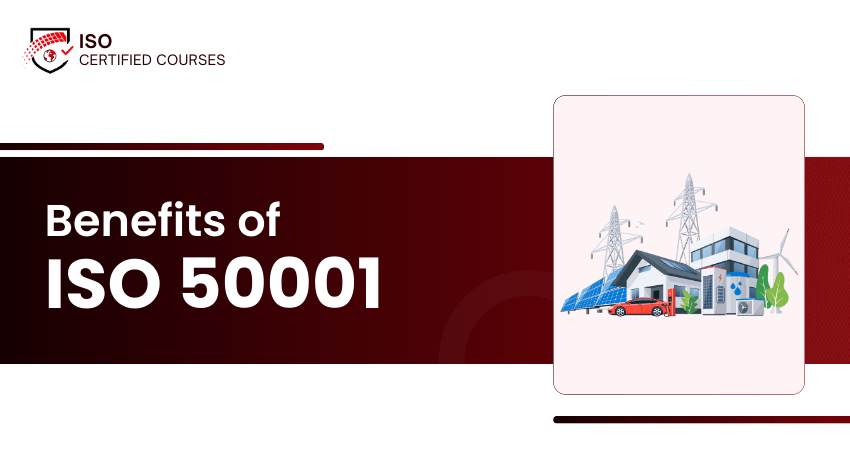
ISO 50001 is an international standard that helps organisations manage and improve their energy use. The Benefits of ISO 50001 include reduced energy costs, improved efficiency, lower environmental impact, effective risk management, and more. It provides a structured system to monitor, control, and continually improve energy performance.

Do you know how much energy your organisation wastes every day without affecting productivity? For many businesses, energy loss happens quietly through inefficient systems, outdated processes, and a lack of clear visibility into energy usage. But will you believe that ISO 50001 offers a practical solution to this challenge?
Yes, it helps organisations understand where energy is being used, identify areas of waste, and improve efficiency without disrupting operations. In this blog, we will explore the top Benefits of ISO 50001 to know how you can create a sustainable business and an efficient future. Let's get started!
What is ISO 50001?
ISO 50001 is an international standard for Energy Management Systems (EnMS). It provides organisations with a clear system to establish, maintain, control, and improve how they use energy. This helps optimise energy performance in a systematic way and increase process efficiency.
ISO 50001 can be applied to organisations of all sizes and across all industries. It follows the Plan, Do, Check, Act (PDCA) cycle, supporting continual improvement in Energy Management and long-term energy performance.
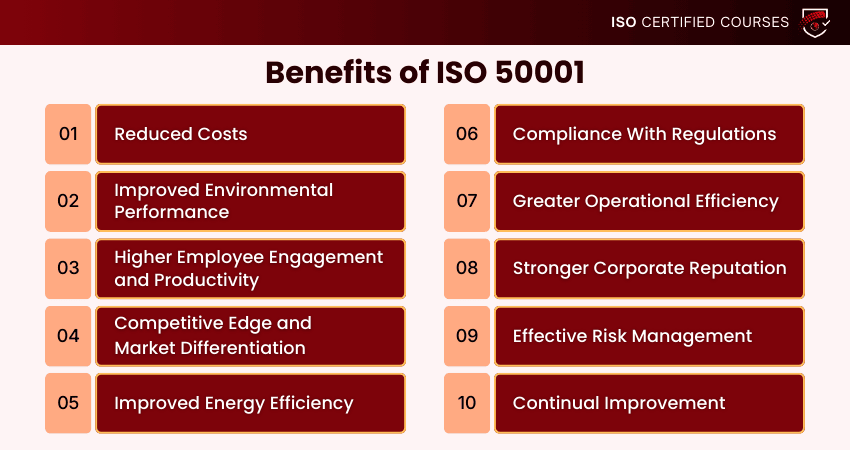
Top 10 Benefits of ISO 50001
Implementing ISO 50001 offers more benefits than energy savings. They extend across financial performance, environmental responsibility, and operational effectiveness. Here are the Benefits of ISO 50001:
1) Reduced Costs
ISO 50001 helps organisations reduce their energy bills by identifying and minimising unnecessary energy use. By managing energy properly, businesses can save money without changing how work is done or affecting productivity.
Tips to Achieve This:
1) Identify areas with high energy consumption
2) Reduce unnecessary energy waste
3) Improve control over energy expenses
4) Plan energy-saving actions effectively
2) Improved Environmental Performance
Lower energy consumption leads to reduced carbon emissions and environmental impacts. ISO 50001 supports organisations to meet sustainability goals by promoting responsible energy use and supporting climate commitments.
Tips to Achieve This:
1) Reduce greenhouse gas emissions
2) Use energy only when required
3) Align with environmental responsibility initiatives
4) Lower negative environmental impact
3) Higher Employee Engagement and Productivity
ISO 50001 encourages employees to participate in energy-saving efforts. When employees understand their role in energy use, they become more aware, responsible, and motivated, which can improve productivity.
Tips to Achieve This:
1) Educate employees on energy saving
2) Encourage responsible daily energy behaviour
3) Share energy performance results
4) Build energy awareness across teams
Support efficient and sustainable Energy Management practices with our
ISO 50001 Foundation Training
– Register today!
4) Competitive Edge and Market Differentiation
Staying compliant with ISO 50001 regulations helps organisations stand out in the market. It shows customers and partners that the business values efficiency and sustainability, which can improve wider business opportunities.
Tips to Achieve This:
1) Show commitment to energy efficiency
2) Meet customer sustainability expectations
3) Communicate energy-saving measures to customers
4) Support supplier and tender requirements
5) Improved Energy Efficiency
The standard helps organisations understand how energy is used and how it can be improved. This leads to better energy performance and long-term efficiency gains. It also supports smarter decisions that improve energy use without affecting daily operations.
Tips to Achieve This:
1) Track energy use accurately
2) Improve the efficiency of energy systems
3) Upgrade inefficient equipment gradually
4) Set clear energy performance targets
6) Compliance With Regulations
ISO 50001 helps organisations meet energy laws and regulations. It ensures that energy requirements are identified, documented, and reviewed regularly to avoid penalties or compliance issues.
Tips to Achieve This:
1) Identify applicable energy regulations clearly
2) Maintain energy compliance records
3) Monitor legal energy requirements regularly
4) Train employees on energy regulations
7) Greater Operational Efficiency
Better energy control often improves the daily operations of your business. ISO 50001 supports smoother processes, better maintenance planning, and fewer disruptions caused by Energy Management issues.
Tips to Achieve This:
1) Optimise energy use in operations
2) Improve equipment maintenance planning
3) Align Energy Management with operational processes
4) Monitor operational energy performance
Learn how to evaluate energy performance with our
ISO 50001 Internal Auditor Training
– Join soon!
8) Stronger Corporate Reputation
Organisations with ISO 50001 are seen as responsible and forward-thinking. Even more, good Energy Management improves your business credibility and builds trust with customers and stakeholders.
Tips to Achieve This:
1) Show commitment to sustainability practices
2) Communicate energy goals and progress
3) Publish energy performance achievements
4) Build trust with transparent reporting
9) Effective Risk Management
Energy-related risks, such as rising prices or supply disruptions, can affect operations. ISO 50001 helps organisations identify and manage such risks before they cause serious problems. This will eventually improve business stability and preparedness.
Tips to Achieve This:
1) Identify energy-related operational risks
2) Reduce exposure to energy price changes
3) Improve planning for energy disruptions
4) Strengthen organisational risk control
10) Continual Improvement
ISO 50001 encourages regular review and improvement of energy performance. This ensures Energy Management keeps improving over time as the organisation grows or changes. This approach helps organisations adapt to new technologies, processes, and energy challenges.
Tips to Achieve This:
1) Review energy performance regularly
2) Set new improvement goals
3) Monitor progress against energy targets
4) Maintain long-term energy improvements
Conclusion
ISO 50001 helps organisations take a smarter and more structured approach to an Energy Management System. The Benefits of ISO 50001 highlight that organisations can improve operational performance and support long-term sustainability when they manage energy-related risks effectively. Ultimately, this helps turn Energy Management into a long-term advantage to build a sustainable future.
Build effective Energy Management Systems with our
ISO 50001 Training
– Sign up now!
Search Smarter
Quickly search through our blog content for what interests you
- Top ISO 9001 Internal Audit Questions and Answers in 2026
- ISO 27005 vs ISO 31000: How to Choose the Right Risk Framework
- Challenges of ISO 14001 and How to Overcome Them
- Top 14 Benefits of ISO 45001 Certification
- What are the ISO 27001 Requirements: A Complete 2026 Guide
- 12 Benefits of ISO 27001 Certification for Business
- ISO 27001 vs ISO 27002: Key Difference and Uses Cases
- ISO 17025 vs ISO 9001: Key Differences and Similarities
- ISO 45001 Requirements for Occupational Health & Safety
- ISO 9001, 14001, and 45001: Key Differences and Similarities
- ISO 27001 vs SOC 2: Understanding Key Differences
- ISO 17025 Requirements: Explained in Detail
- What is ISO 27001 Gap Analysis? A Complete Overview
- ISO 17025: An Overview of Laboratory Accreditation
- What is ISO 27001: An Overview of the Information Security Standard
- ISO 27001 Controls from Annex A: What Changed in ISO 27001:2022?
- What is ISO 50001: Meaning, Requirements & Clauses Explained
- What is a Quality Management System (QMS): A Comprehensive Overview
- ISO 22000: Food Safety Management System Explained
- What is the Statement of Applicability (SoA) in ISO/IEC 27001?
- What is ISO 31000? The Risk Management Standard Explained
- What Is ISO 13485? Understanding Its 8 Key Sections
- ISO 56000: A Comprehensive Guide to Innovation Management
- What is ISO 14064? Components, Execution, and Benefits Explained
- Carbon Footprint: Definition, Types, and How to Calculate It
- ISO 22301: Requirements, Benefits and How to Implement It?
- ISO 9001 vs ISO 9002: Key Differences You Should Know
- Carbon Accounting: Meaning, Benefits, and Challenges
- Ecological Footprint: Meaning, Importance, and Purpose
- Compliance Management System: Components and How to Implement
- What is Competency Management? Benefits, Tips and Best Practices
- ISO 9001 and 27001: Quality Management vs Information Security Management
- ISO 27001 Annex A Controls: Everything You Need to Know
- ISO 27001 Audit: A Complete Guide to the Audit Process
- ISO 9001 vs ISO 14001: Key Differences and Similarities
No match found
Frequently Asked Questions
No FAQs available for this blog.