



ISO 9001, 14001, and 45001: Key Differences and Similarities
The key Difference Between ISO 9001 and 14001 and 45001 is that they are associated with QMS, EMS, and OH&S management systems, respectively. These standards share many common elements, which can simplify the implementation process of an Integrated Management System (IMS) that incorporates multiple standards.

Quality, sustainability and safety form the backbone of an organisation's trustworthiness and competitiveness. This is why understanding the Difference Between ISO 9001 and 14001 and 45001 is so important. These three powerful standards shape how organisations deliver excellence, protect the planet and safeguard people from injuries.
Although each has its unique focus, they share a common goal: building trust and resilience. If you are curious what sets them apart, you're in the right place. This blog explores the Difference Between ISO 9001 and 14001 and 45001, as well as their similarities in detail. Dive in to see how these standards can power up your systems and fuel the future‑ready business you’ve always imagined.
What is ISO 9001?
ISO 9001 is an international standard for Quality Management Systems (QMS). It helps organisations consistently deliver products and services that meet customer expectations and regulatory requirements. The standard focuses on process control, customer satisfaction, leadership involvement, risk-based thinking, and continual improvement across all business operations.
Who Needs ISO 9001?
ISO 9001 is suitable for any organisation, regardless of size or sector, that wants to improve quality, efficiency, and customer confidence. It is widely used by manufacturing companies, service providers, public sector organisations, and growing businesses aiming to standardise processes and enhance performance.
What is ISO 14001?
ISO 14001 is an international standard for Environmental Management Systems (EMS). It provides a structured approach for organisations to manage environmental responsibilities, reduce negative environmental impacts, and support sustainability objectives. The standard emphasises environmental risk management, legal awareness, resource efficiency, and continual environmental improvement.
Who Needs ISO 14001?
ISO 14001 is relevant for organisations that want to manage their environmental impact responsibly. It is commonly adopted by manufacturing firms, construction companies, logistics providers, and organisations with significant environmental interactions or sustainability commitments.
What is ISO 45001?
ISO 45001 is an international standard for Occupational Health and Safety (OH&S) Management Systems. It helps organisations prevent work-related injuries, ill health, and fatalities by identifying hazards, assessing risks, and improving workplace safety performance. The standard places strong emphasis on leadership, worker participation, and proactive risk control.
Who Needs ISO 45001?
ISO 45001 is suitable for organisations of all sizes that aim to create safer working environments. It is particularly important for high-risk sectors such as construction, manufacturing, engineering, healthcare, and energy, where effective health and safety management is critical.
Differences Between ISO 9001, ISO 14001, and ISO 45001
Now let’s explore the key differences between ISO 9001 vs 14001 vs 45001:
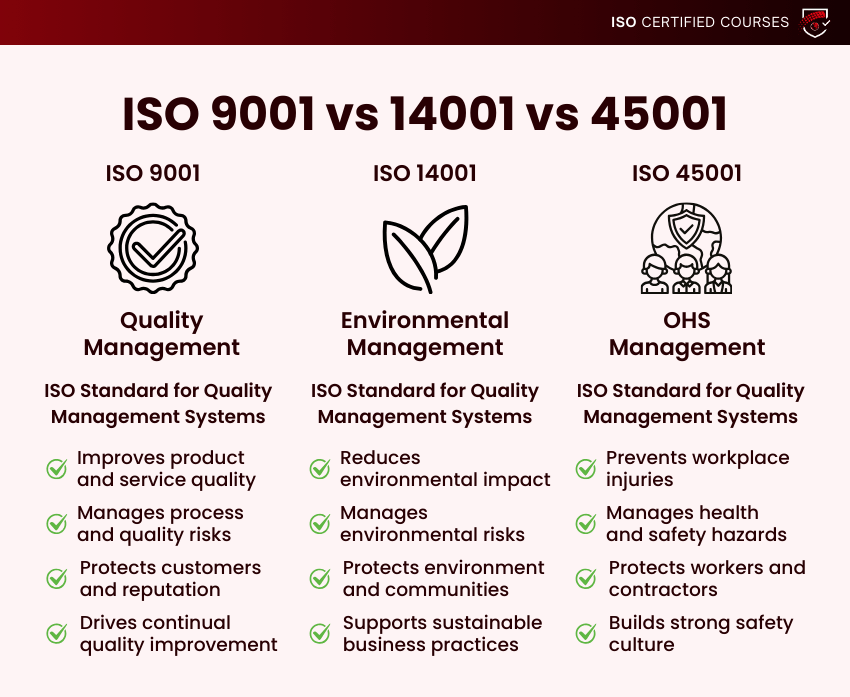
Let’s explore these distinctions in detail:
Focus Area
ISO 9001 focuses on quality management and customer satisfaction. ISO 14001 concentrates on managing environmental impacts and sustainability. ISO 45001 addresses occupational health and safety to prevent work-related injuries and ill health.
Primary Objective
The main objective of ISO 9001 is to ensure consistent product and service quality. ISO 14001 aims to reduce environmental risks and improve environmental performance. ISO 45001 seeks to create safer workplaces by controlling health and safety risks.
Key Risks Managed
ISO 9001 manages risks related to process failures and customer dissatisfaction. ISO 14001 manages environmental risks such as pollution, waste, and resource use. ISO 45001 manages workplace hazards that could cause injury or illness.
Who It Protects
ISO 9001 primarily protects customers and the business reputation. ISO 14001 protects the environment and surrounding communities. ISO 45001 protects employees, contractors, and other workplace participants.
Typical Business Benefits
ISO 9001 improves efficiency and customer trust. ISO 14001 supports sustainability goals and regulatory awareness. ISO 45001 reduces accidents, improves safety culture, and supports workforce wellbeing.
Transform your career with ISO 14001 Lead Auditor Training and inspire impactful environmental change.
Similarities Between ISO 9001, ISO 14001, and ISO 45001
ISO 9001, ISO 14001 and ISO 45001 share several common characteristics. These make them compatible and easy to integrate. Here are the main ones:
1) Shared High-Level Structure: All three standards follow the Annex SL framework, making them easy to integrate into a single management system.
2) Risk-Based Approach: Each standard requires identifying and managing risks and opportunities to prevent issues and improve performance.
3) Leadership Responsibility: Top management plays an active role in setting direction, providing resources, and ensuring system effectiveness.
4) Focus on Continual Improvement: Regular monitoring, corrective actions, and performance reviews drive ongoing improvement.
5) Universal Applicability: Suitable for organisations of all sizes and industries, regardless of sector or complexity.
Managing ISO 9001, 14001, and 45001 with Compliance Software
A good compliance software tool can significantly streamline the management process of ISO 9001, ISO 14001 and ISO 45001. Here are some of its numerous benefits that traditional manual methods or disparate systems simply cannot match:
1) Centralised Management: A Compliance software brings all ISO requirements, documents and records into a single platform.
2) Reduced Manual Effort: It automates workflows, approvals and updates across standards.
3) Real-time Visibility: It uses dashboards and alerts to track compliance status and gaps.
4) Improved Audit Readiness: It maintains version control, audit trails and clear evidence records.
5) Stronger Data Security: It applies role-based access and secure storage for sensitive information.
6) Supports Continual Improvement: The software tracks actions, trends and performance against ISO objectives.
7) Scalable and Flexible: The system adapts easily as standards, regulations, or organisational needs change.
Lead the way to safer workplaces with our comprehensive range of ISO 45001 Courses - Sign up now!
Which is the Right ISO Certification for the Business?
Selecting the most suitable ISO Certification depends on your organisation’s priorities and operational goals. Here are the key factors to consider:
1) Environmental Impact: Organisations with significant environmental considerations can use ISO 14001 to reduce their ecological footprint.
2) Customer Expectations: If delivering consistent quality and meeting customer requirements is a priority, ISO 9001 is a good choice.
3) Workplace Safety: For industries with higher health and safety risks, ISO 45001 is essential for managing occupational hazards and protecting employees.
Many organisations choose to adopt multiple ISO standards through an integrated management system.
Conclusion
ISO 9001, ISO 45001 and ISO 14001 address different priorities, yet work best together. When aligned, they create a balanced framework for quality, environmental responsibility, and workplace safety. Understanding the Difference Between ISO 9001 and 14001 and 45001 and their shared principles allows organisations to build integrated systems that reduce risk and support long-term, sustainable success.
Search Smarter
Quickly search through our blog content for what interests you
- Top ISO 9001 Internal Audit Questions and Answers in 2026
- ISO 27005 vs ISO 31000: How to Choose the Right Risk Framework
- Challenges of ISO 14001 and How to Overcome Them
- Top 14 Benefits of ISO 45001 Certification
- What are the ISO 27001 Requirements: A Complete 2026 Guide
- 12 Benefits of ISO 27001 Certification for Business
- ISO 27001 vs ISO 27002: Key Difference and Uses Cases
- ISO 17025 vs ISO 9001: Key Differences and Similarities
- ISO 45001 Requirements for Occupational Health & Safety
- ISO 27001 vs SOC 2: Understanding Key Differences
- ISO 17025 Requirements: Explained in Detail
- What is ISO 27001 Gap Analysis? A Complete Overview
- ISO 17025: An Overview of Laboratory Accreditation
- What is ISO 27001: An Overview of the Information Security Standard
- ISO 27001 Controls from Annex A: What Changed in ISO 27001:2022?
- What is ISO 50001: Meaning, Requirements & Clauses Explained
- Top 10 Benefits of ISO 50001: A Detailed Explanation
- What is a Quality Management System (QMS): A Comprehensive Overview
- ISO 22000: Food Safety Management System Explained
- What is the Statement of Applicability (SoA) in ISO/IEC 27001?
- What is ISO 31000? The Risk Management Standard Explained
- What Is ISO 13485? Understanding Its 8 Key Sections
- ISO 56000: A Comprehensive Guide to Innovation Management
- What is ISO 14064? Components, Execution, and Benefits Explained
- Carbon Footprint: Definition, Types, and How to Calculate It
- ISO 22301: Requirements, Benefits and How to Implement It?
- ISO 9001 vs ISO 9002: Key Differences You Should Know
- Carbon Accounting: Meaning, Benefits, and Challenges
- Ecological Footprint: Meaning, Importance, and Purpose
- Compliance Management System: Components and How to Implement
- What is Competency Management? Benefits, Tips and Best Practices
- ISO 9001 and 27001: Quality Management vs Information Security Management
- ISO 27001 Annex A Controls: Everything You Need to Know
No match found
Frequently Asked Questions
No FAQs available for this blog.