
























Compliance Management System: Components and How to Implement
A Compliance Management System outlines its components and steps to implement compliance while reducing legal risks and improving operational efficiency. It helps organisations follow rules, policies, and industry standards effectively, while fostering a culture of ethical practices and supporting long-term stability and trust.

Keeping up with regulations can be overwhelming, especially when rules keep changing, and small mistakes can lead to serious consequences. Many organisations rely on scattered processes, making it hard to stay consistent and compliant. A well-structured Compliance Management System brings everything together, providing businesses with a clear and reliable way to manage policies, meet requirements, and reduce uncertainty in daily operations.
This is where having a structured approach makes a real difference. A strong Compliance Management System not only simplifies compliance but also builds confidence across the organisation by improving accountability and transparency. In this blog, you will learn its importance, key elements, steps to implement it, and more. Let’s begin!
What is a Compliance Management System (CMS)?
A Compliance Management System (CMS) is an integrated framework that helps organisations meet regulatory requirements, internal policies, and industry standards in a structured way. It is a combination of processes, controls, and practices, all working together to reduce compliance risks and ensure ongoing adherence.
An effective CMS helps organisations avoid risks like fines, operational disruptions, and data breaches. It supports overall risk management by identifying issues early and enabling timely corrective action. Modern systems often use automation to monitor activities and spot risks in real time, ensuring consistent compliance across operations.
Why is a CMS Important?
A Compliance Management System is important because organisations today must deal with a growing number of complex regulations across industries and regions. Laws like GDPR require strict adherence, and failing to comply can lead to serious consequences. As businesses expand globally, managing different regulatory requirements becomes even more challenging, making a structured approach integral to staying compliant.
A CMS helps organisations navigate this complexity by identifying compliance gaps, supporting real-time monitoring, and enabling quick corrective actions. It standardises compliance practices across regions while adapting to industry-specific requirements. Beyond avoiding risks, a CMS builds trust by promoting ethical practices and accountability, helping build customer trust.
Key Elements of a Compliance Management System
A Compliance Management System is built on several key elements that work together to ensure effective oversight, implementation, and continuous monitoring of compliance activities. These elements help organisations manage regulatory requirements, reduce risks, and promote a strong culture of accountability. Let’s explore the key components below:
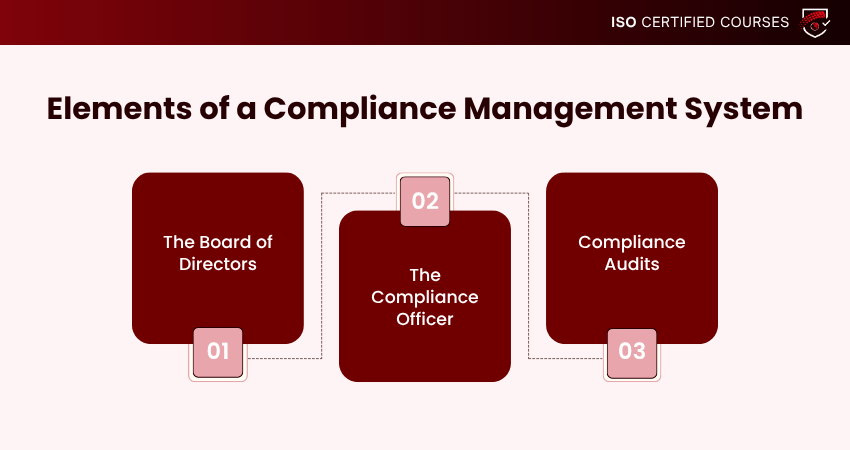
1) The Board of Directors
The Board of Directors plays a central role in a Compliance Management System by setting the tone for compliance across the organisation. It is responsible for ensuring that compliance is taken seriously, approving the framework, and communicating expectations to senior management and stakeholders. Strong board oversight helps create a culture of accountability and supports consistent adherence to legal and regulatory requirements.
2) The Compliance Officer
The Compliance Officer manages the day-to-day compliance function and translates board expectations into practical actions. This includes developing policies, conducting training, assessing risks, handling complaints, and reporting issues to senior management. By acting as a link between leadership and operations, the Compliance Officer ensures that compliance processes are implemented effectively and consistently.
3) Compliance Audits
Compliance audits are a key element of a CMS as they provide an independent review of adherence to internal policies and regulatory requirements. Conducted internally or by external reviewers, they help identify weaknesses, document findings, and recommend improvements. Also, they strengthen accountability and highlight areas for corrective action, while ongoing monitoring and risk assessments support continuous compliance.
Build your inspection knowledge from the ground up and build strong fundamentals with the ISO 17020 Foundation Training – Sign up now!
Steps to Implement a Compliance Management System
Implementing a Compliance Management System requires a structured approach to ensure it aligns with organisational needs and regulatory expectations. A well-planned implementation helps organisations build a sustainable and effective compliance framework. Let’s look at the essential steps below:
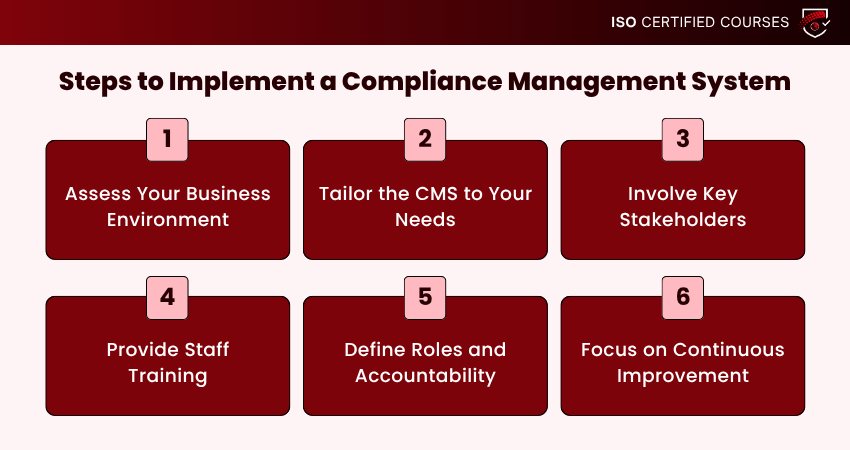
1) Assess Your Business Environment
Begin by understanding your organisation’s compliance needs based on industry regulations, customer expectations, and operational complexity. Identify relevant frameworks, such as Payment Card Industry Data Security Standard (PCI DSS), and align them with your business goals to ensure the right foundation for your CMS.
2) Tailor the CMS to Your Needs
Once requirements are defined, customise the Compliance Management System to fit your organisation’s structure, workflows, and technology. This includes developing controls, assigning responsibilities, and integrating the CMS with existing systems. A tailored approach ensures the system is practical, efficient, and aligned with daily operations.
3) Involve Key Stakeholders
Now, involve senior management and leadership early to build a strong compliance culture. Their support is essential for prioritising compliance, allocating resources, and aligning the Compliance Management System with overall business objectives.
4) Provide Staff Training
Then, it is time to provide regular and role-specific training to ensure employees understand compliance requirements and their responsibilities. Keep training practical, updated, and easy to access to encourage awareness and active participation.
5) Define Roles and Accountability
Define roles, responsibilities, and expectations clearly across the organisation. Assign ownership of compliance tasks to ensure activities are completed effectively. Ensure accountability is reinforced through regular reporting and performance reviews, so responsibilities are tracked and compliance efforts remain consistent.
6) Focus on Continuous Improvement
It is crucial to continuously monitor and review the CMS to keep it aligned with changing regulations and business needs. Regular assessments and updates help improve controls, address gaps, and maintain long-term compliance effectiveness.
Lead the way in inspection compliance and turn strategy into certified success with the ISO 17020 Lead Implementer Training – Sign up today!
What Makes a CMS Successful?
A Compliance Management System is successful when it combines clear processes, effective oversight, and continuous monitoring to manage compliance risks efficiently. A well-functioning CMS not only ensures adherence to regulations but also strengthens organisational resilience and trust. Let’s explore the key aspects that contribute to its success:
1) Risk Evaluation
Regularly evaluating organisational risks helps identify potential compliance gaps. A strong risk management approach ensures businesses stay prepared for regulatory changes and evolving operational challenges. It also enables organisations to prioritise high-risk areas and allocate resources more strategically, improving overall risk control and decision-making.
2) Policies and Guidelines
Well-documented policies and procedures form the foundation of a CMS. They provide clear guidance on compliance requirements and should be regularly updated to reflect changes in regulations and business operations. Also, clear documentation ensures consistency in decision-making across the organisation.
3) Training and Communication
Effective training ensures employees understand compliance requirements and their responsibilities. Clear communication keeps teams informed and encourages active participation in maintaining standards. Regular updates, practical learning methods, and easily accessible resources help reinforce awareness and ensure compliance practices are consistently followed.
4) Incident Response and Management
A strong CMS includes a clear plan to respond to compliance issues quickly. Prepared response strategies help minimise impact and ensure timely corrective action when incidents occur. This also helps organisations learn from incidents and strengthen their compliance framework over time.
5) Monitoring and Proactive Oversight
Continuous monitoring helps detect weaknesses in processes, systems, or training. This allows organisations to address issues early, maintain compliance, and avoid unexpected risks. Also, it supports informed decision-making by providing real-time insights into compliance performance.
Learn how to lead audits that set the standard with the ISO 17020 Lead Auditor Training – Sign up now!
Benefits of a Compliance Management System
A Compliance Management System provides several benefits that help organisations operate effectively while meeting regulatory requirements. Let’s look at its core benefits below:
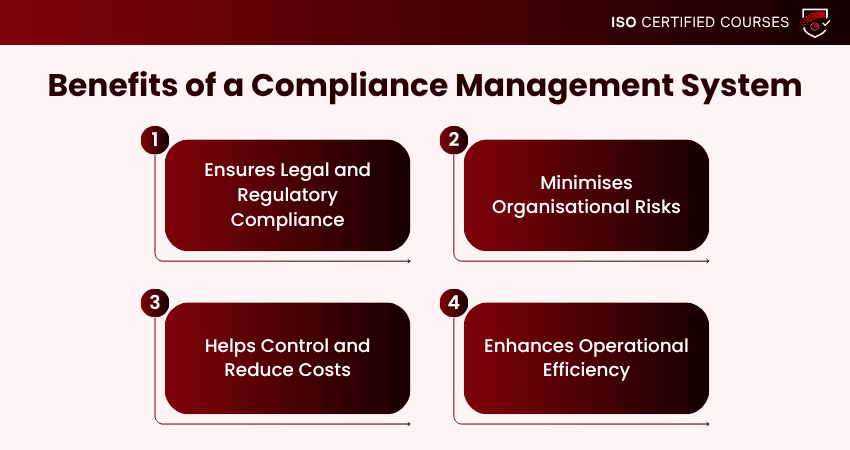
1) Ensures Legal and Regulatory Compliance
A Compliance Management System helps organisations meet industry laws and regulations effectively. By ensuring consistent adherence to legal requirements, it reduces the risk of penalties, fines, and regulatory sanctions.
2) Minimises Organisational Risks
Compliance Management Systems enable organisations to identify and manage potential compliance risks early. This helps minimise legal issues, reputational damage, and operational disruptions, protecting the organisation from costly consequences.
3) Helps Control and Reduce Costs
By addressing compliance issues proactively, a Compliance Management System helps avoid fines, legal expenses, and major corrective efforts. Also, it reduces the chances of disruptions, leading the organisation to long-term cost savings.
4) Enhances Operational Efficiency
A well-structured Compliance Management System improves communication and ensures consistent decision-making across the organisation. Clear processes and guidelines help employees follow requirements more easily, increasing overall efficiency.
Why Should You Use Compliance Management Software?
Compliance Management Software plays a crucial role in simplifying and strengthening compliance efforts. It provides a centralised platform where all compliance-related information, like policies, controls, tasks, and audit findings, can be stored and accessed easily. This ensures that teams always work with accurate and updated information, improving consistency and reducing the chances of errors.
Additionally, it helps automate routine compliance tasks, streamline workflows, and generate reports for better visibility and decision-making. It supports scalability, allowing organisations to adapt their compliance processes as they grow or as regulations change. Overall, it enhances efficiency, improves control, and makes it easier to manage complex compliance requirements effectively.
Conclusion
A Compliance Management System is essential for organisations looking to manage risks, meet regulatory requirements, and build long-term trust. By focusing on structured implementation and continuous improvement, businesses can ensure compliance while enhancing efficiency and accountability. As regulations evolve, investing in a strong CMS will help organisations stay prepared, competitive, and confident in their operations.
Develop inspection excellence with confidence and turn standards into inspection success with the ISO 17020 Training – Join now!
Search Smarter
Quickly search through our blog content for what interests you
- Top ISO 9001 Internal Audit Questions and Answers in 2026
- ISO 27005 vs ISO 31000: How to Choose the Right Risk Framework
- Challenges of ISO 14001 and How to Overcome Them
- Top 14 Benefits of ISO 45001 Certification
- What are the ISO 27001 Requirements: A Complete 2026 Guide
- 12 Benefits of ISO 27001 Certification for Business
- ISO 27001 vs ISO 27002: Key Difference and Uses Cases
- ISO 17025 vs ISO 9001: Key Differences and Similarities
- ISO 45001 Requirements for Occupational Health & Safety
- ISO 9001, 14001, and 45001: Key Differences and Similarities
- ISO 27001 vs SOC 2: Understanding Key Differences
- ISO 17025 Requirements: Explained in Detail
- What is ISO 27001 Gap Analysis? A Complete Overview
- ISO 17025: An Overview of Laboratory Accreditation
- What is ISO 27001: An Overview of the Information Security Standard
- ISO 27001 Controls from Annex A: What Changed in ISO 27001:2022?
- What is ISO 50001: Meaning, Requirements & Clauses Explained
- Top 10 Benefits of ISO 50001: A Detailed Explanation
- What is a Quality Management System (QMS): A Comprehensive Overview
- ISO 22000: Food Safety Management System Explained
- What is the Statement of Applicability (SoA) in ISO/IEC 27001?
- What is ISO 31000? The Risk Management Standard Explained
- What Is ISO 13485? Understanding Its 8 Key Sections
- ISO 56000: A Comprehensive Guide to Innovation Management
- What is ISO 14064? Components, Execution, and Benefits Explained
- Carbon Footprint: Definition, Types, and How to Calculate It
- ISO 22301: Requirements, Benefits and How to Implement It?
- ISO 9001 vs ISO 9002: Key Differences You Should Know
- Carbon Accounting: Meaning, Benefits, and Challenges
- Ecological Footprint: Meaning, Importance, and Purpose
- What is Competency Management? Benefits, Tips and Best Practices
- ISO 9001 and 27001: Quality Management vs Information Security Management
- ISO 27001 Annex A Controls: Everything You Need to Know
- ISO 27001 Audit: A Complete Guide to the Audit Process
- ISO 9001 vs ISO 14001: Key Differences and Similarities
No match found
Frequently Asked Questions
What is an Example of Compliance Management?
An example of compliance management is a hospital following the General Data Protection Regulation (GDPR) by using encryption, role-based access, and staff training to protect patient data.
What are the Four Pillars of Compliance Management System?
The four pillars of Compliance Management Systems include:
1) Policies and procedures for clear standards
2) Training and education to build awareness
3) Monitoring and auditing to assess effectiveness
4) Reporting and corrective action to resolve issues and ensure continuous improvement
What are the 5 Cs of Compliance?
The 5Cs of Compliance are:
1) Commitment: Leadership support for compliance
2) Culture: Promoting ethical behaviour
3) Communication: Clearly sharing policies
4) Controls: Managing and reducing risks
5) Continuous Monitoring: Ensuring ongoing compliance