





















ISO 13485 vs ISO 9001: A Complete Comparison and Usage Guide 2026
ISO 9001 and ISO 13485 are Quality Management standards designed to improve business processes and product reliability. While ISO 13485 focuses on medical device quality and regulatory compliance, ISO 9001 applies to general Quality Management across all industries. Both help organisations improve efficiency and build customer trust.

The success of a business largely depends on the quality of the products or services it offers. Organisations that maintain high standards of quality gain customer trust, improve operational efficiency, and stay competitive in the market. This is why many companies adopt Quality Management standards to strengthen their processes.
Two widely used standards in this area are ISO 9001 and ISO 13485. They provide clear guidelines to monitor operations, manage risks, and deliver products with high quality. In this blog, we will explore ISO 13485 vs ISO 9001, including their key differences, similarities, and how to choose the right standard for your organisation. Let's dive in!
Table of Contents
1) ISO 9001 vs ISO 13485
2) ISO 9001 vs ISO 13485: What's the Key Difference?
3) ISO 13485 and ISO 9001: Similarities
4) ISO 13485 vs ISO 9001: Which One to Choose?
5) Conclusion
ISO 9001 vs ISO 13485
ISO 9001 and ISO 13485 are standards for Quality Management, but they are designed for different purposes and industries. Understanding the purpose and scope of each standard allows organisations to implement a Quality Management System that aligns with their operational and regulatory compliance.
1) What is ISO 9001?
ISO 9001 is an globally respected standard for Quality Management System (QMS). It offers a structured framework that helps organisations ensure their products or services meet customer requirements and quality expectations. It promotes continuous improvement across all business processes.
By implementing ISO 9001, businesses can streamline their operations, reduce errors, and build stronger trust with customers and stakeholders. It also helps improve internal processes and maintain consistent product or service quality.
2) What is ISO 13485?
ISO 13485 is a specialised Quality Management System standard for the medical device industry. It provides requirements for organisations involved in the design, development, installation and servicing of medical devices.
ISO 13485 focuses on ensuring product safety, regulatory compliance and consistent quality throughout the medical device lifecycle. It confirms that medical devices are designed and manufactured in a safe, reliable, and controlled manner.
ISO 9001 vs ISO 13485: What's the Key Difference?
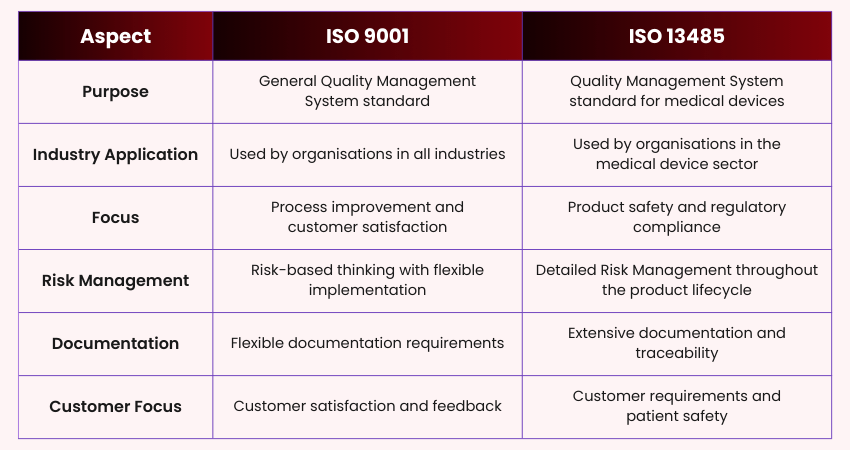
Although ISO 9001 and ISO 13485 are both Quality Management standards, they differ in their focus and application. Understanding these key differences helps organisations choose the most suitable standard for their operational and regulatory needs. Below are the key areas where ISO 13485 vs 9001 differ:
1) Risk Management
Risk Management is one of the most important differences between ISO 9001 and ISO 13485. ISO 9001 encourages organisations to identify and address risks that may affect product quality or customer satisfaction. However, the standard provides flexibility in how organisations manage those risks.
ISO 13485, by contrast, requires formal and detailed risk management processes throughout the product lifecycle. Medical device organisations need to identify potential risks during product design, manufacturing and post-market activities to ensure patient safety.
2) QMS Responsibilities
ISO 9001 offers flexibility in assigning responsibilities within QMS. Senior management is responsible for establishing the quality policy, setting objectives, and ensuring the QMS is implemented effectively across the organisation.
On the other hand, ISO 13485 requires clearer accountability for managing QMS. Organisations need to appoint a management representative responsible for maintaining the QMS and ensuring compliance with medical device regulatory requirements.
3) Document Control
ISO 9001 requires organisations to maintain documented information required for the proper operation of the Quality Management System. However, the standard allows flexibility in how organisations create, manage, and control their documentation.
However, ISO 13485 requires stricter documents and record‑keeping control procedures. Organisations have to maintain detailed records, including product specifications, process documentation and traceability records. This helps ensure unerring compliance with medical device regulations.
4) Management Roles
Leadership involvement is a core principle in both standards, but the expectations differ. ISO 9001 emphasises leadership engagement in establishing quality objectives, promoting a culture of improvement, and allocating resources.
On the contrary, ISO 13485 requires stronger management oversight. Senior management must ensure regulatory requirements are met and maintain clear accountability for quality and compliance within the organisation.
5) Product Requirements
ISO 9001 focuses on delivering products or services that meet customer expectations and regulatory requirements. It applies to products and services across all industries, with general quality requirements.
However, ISO 13485 focuses specifically on medical device safety, performance, and regulatory compliance. It includes strict requirements for product design controls, validation procedures, and post-market surveillance.
6) Continuous Improvement
ISO 9001 strongly emphasises ongoing improvement of processes and performance. Organisations are expected to continually refine their quality systems through audits, feedback, and performance monitoring.
On the other hand, ISO 13485 does not emphasise continuous improvement to the same degree. Instead, it focuses more on maintaining consistent compliance with regulatory and safety requirements.
Enhance your understanding of medical device quality standards with
ISO 13485 Foundation Training
– Register now!
7) Training Procedures
ISO 9001 requires organisations to ensure employees have the necessary skills and knowledge to do their roles effectively. Training programmes may vary depending on the organisation's operational needs.
ISO 13485 requires more formal and documented training procedures. Employees involved in medical device production must receive specific training related to regulatory compliance, product safety, and quality processes.
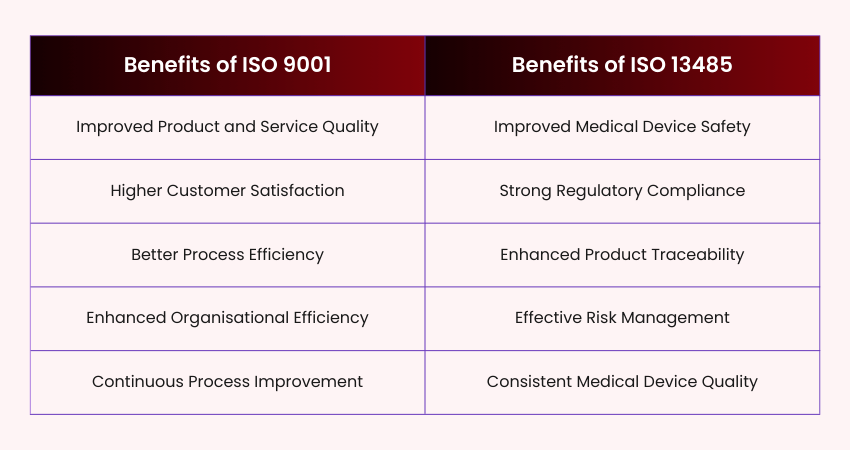
ISO 13485 and ISO 9001: Similarities
Although ISO 9001 and ISO 13485 serve different industries, they share several common principles because both are based on the framework of Quality Management Systems. Here are the similarities of ISO 13485 vs ISO 9001:
1) Risk Assessment
Both ISO 9001 and ISO 13485 require organisations to find and manage risks that may affect product quality or customer satisfaction. While ISO 13485 includes stricter Risk Management processes, both standards encourage organisations to adopt a proactive approach to Risk Assessment.
2) Customer Focus
ISO 9001 focuses heavily on knowing your customer needs and providing products or services that satisfy those expectations. In the same way, ISO 13485 prioritises customer needs but with an additional emphasis on patient safety and regulatory compliance.
3) Employee Competency
Both ISO 9001 and ISO 13485 highlight the importance of having skilled and trained employees. Organisations need to ensure that employees have the right knowledge and abilities to perform their tasks effectively. However, ISO 13485 requires more detailed training records, especially for employees working with medical devices.
ISO 13485 vs ISO 9001: Which One to Choose?
Selecting between ISO 9001 and ISO 13485 depends largely on your industry, business goals, and regulatory requirements. While both standards focus on improving Quality Management Systems, they are designed for different purposes. Let's check which one you can choose for your business:
1) Why Choose ISO 9001?
ISO 9001 is ideal for organisations that want to establish a strong QMS while maintaining flexibility in implementation. It is widely used by organisations of all sizes across various industries. Businesses adopt ISO 9001 to improve operational efficiency, boost customer satisfaction, and strengthen their market reputation.
2) Why Choose ISO 13485?
ISO 13485 is specifically designed for companies involved in the medical device lifecycle, including manufacturers, suppliers, distributors and service providers. Organisations choose ISO 13485 when they need to show compliance with regulatory requirements related to medical devices.
Conclusion
ISO 9001 and ISO 13485 are valuable Quality Management standards that help organisations improve processes, maintain consistent quality and build customer confidence. By understanding the differences and similarities between these two standards, organisations can choose the most suitable standard based on their industry requirements, operational needs and quality goals.
Implement effective Quality Management practices with ISO 9001 Foundation Training – Join today!
Search Smarter
Quickly search through our blog content for what interests you
- ISO 9001 Principles: Quality Management Principles Explained
- ISO 9000 vs ISO 9001: Choosing the Right Quality Standard
- Key Differences Between ISO 9001 and 22000: Explained
- ISO 9001 Requirements: Key Elements for Quality Management
- ISO 45001 Implementation: Benefits and Step-by-Step Guide
- 17 Key Elements of ISO 14001 Environmental Management System
- ISO 17025 Principles: Explained in Detail
- ISO 14001 Checklist: Key Requirements for ISO 14001
- ISO 45001 Objectives: Definition, Plans to Achieve and Examples
- Difference Between OHSAS 18001 and ISO 45001: Detailed Comparison
- ISO 14001 and ISO 50001: What are the Differences?
- What is ISO 27001:2022? Clauses and Requirements Explained
- What is an Integrated Management System (IMS) and its Components?
- ISO 13485 Benefits Explained: What Manufacturers Must Know
- ISO 20000 vs ISO 27001: A Complete Comparison Guide 2026
- ISO 27001 vs. ISO 22301: Key Differences & Similarities Explained
- ISO 26000: A Guide to Social Responsibility Standards
No match found
Frequently Asked Questions
No FAQs available for this blog.