
























Difference Between OHSAS 18001 and ISO 45001: Detailed Comparison
OHSAS 18001 and ISO 45001 are occupational health and safety standards. OHSAS 18001 is focused on managing workplace safety risks through procedures and compliance, while ISO 45001 takes a proactive, people-centred approach. Both aim to reduce workplace risks, improve safety performance, and promote employee well-being.

Is your organisation still relying on outdated health and safety practices without realising it? Many businesses continue to follow systems that meet basic requirements but fail to address modern workplace risks, employee involvement, and leadership responsibility.
With the shift from OHSAS 18001 to ISO 45001, Health and Safety Management has moved beyond paperwork and procedures. This blog explains the key differences between OHSAS 18001 and ISO 45001 and helps you understand which standard better supports today’s safety expectations and long-term organisational success. Let's dive in!
What is OHSAS 18001?
OHSAS 18001, short for Occupational Health and Safety Assessment Series, is an international standard to help organisations control risks related to workplace health and safety. It helps identify hazards, assess risks, and implement controls to prevent accidents, injuries, and work-related ill health.
OHSAS 18001 was replaced by ISO 45001 in 2018. Later, it was officially withdrawn in 2021, following a transition period that allowed organisations time to migrate to ISO 45001.

What is ISO 45001?
ISO 45001 is the international standard for Occupational Health and Safety (OH&S) Management Systems. It replaced OHSAS 18001 and introduced a more robust, proactive, and strategic approach to managing workplace health and safety risks.
ISO 45001 encourages organisations to look at how work is planned, how decisions are made, and how people are involved in safety matters. Leadership commitment and worker participation are central to this standard.
What is the Difference Between OHSAS 18001 and ISO 45001?
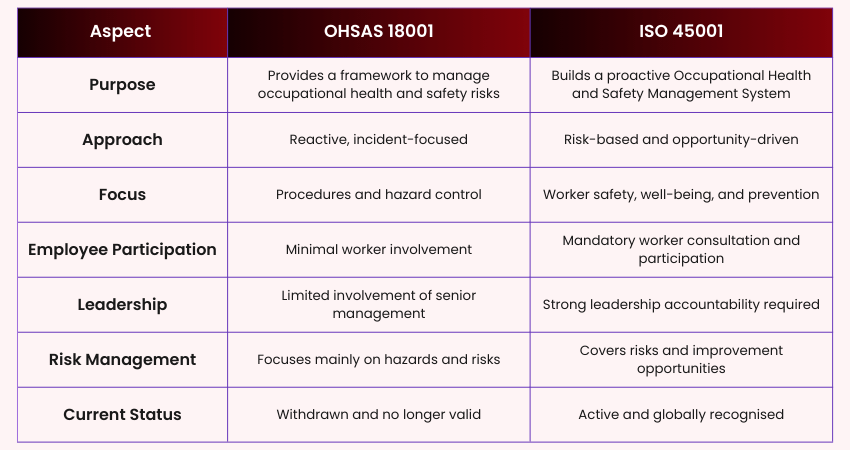
Although both standards aim to improve workplace health and safety performance, there are several important differences between OHSAS 18001 and ISO 45001. Let's check some of those differences:
1) Scope
OHSAS 18001 mainly focused on risks within the organisation’s direct control. This included internal activities, equipment, and employees. While it is useful, it did not focus more on risks linked to external factors such as contractors, suppliers, or changing working conditions.
On the contrary, ISO 45001 has a wider scope. It requires organisations to look at both internal and external issues that may affect workplace health and safety. This includes legal requirements, working environments, organisational culture, and the needs of workers and stakeholders.
2) Structure
OHSAS 18001 followed a procedure-focused structure like the Plan-Do-Check-Act (PDCA) cycle to manage workplace hazards and risks.
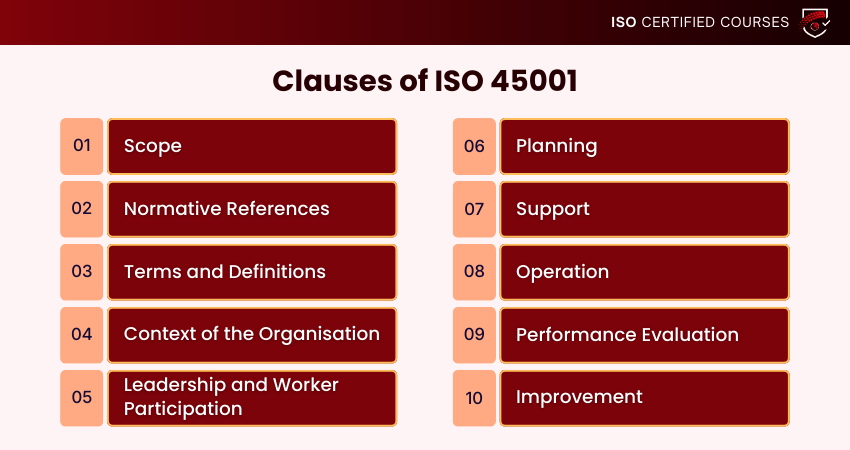
ISO 45001 follows a high-level structure, which is used across modern ISO management system standards. This structure includes common clauses such as context of the organisation, leadership, planning, support, operation, performance evaluation, and improvement.
3) Leadership and Employee Participation
Under OHSAS 18001, health and safety responsibilities were often handled by a specific manager or department. Senior leaders were involved, but they were not clearly required to take full responsibility.
ISO 45001 places leadership at the centre of the system. Senior management is required to take overall responsibility for health and safety performance. This includes setting clear goals, providing resources, and making sure safety is considered in business decisions. Employee participation is also much stronger in ISO 45001, with greater emphasis on consultation and involvement.
Learn how to audit workplace health and safety systems with our ISO 45001 Internal Auditor Training – Register today!
4) Role of the Management Representative
OHSAS 18001 required organisations to appoint a management representative to oversee the health and safety system. In practice, this often meant that responsibility was assigned primarily to one individual.
ISO 45001 removes this requirement. Instead, it makes senior management directly accountable for the effectiveness of the Occupational Health and Safety Management System.
5) Managing Risks and Potential Opportunities
OHSAS 18001 focused mainly on identifying hazards and reducing risks. This approach helped prevent accidents, but it was largely focused on risk prevention rather than improvement.
ISO 45001 goes further by asking organisations to think about both risks and opportunities. This means looking for ways to improve safety, employee well-being, and working conditions, instead of only preventing harm.
Benefits of OHSAS 18001
Even though it is no longer valid, OHSAS 18001 helped many organisations improve their approach to health and safety. Its key benefits included:
1) A clear framework for managing workplace health and safety
2) Better control of hazards and risks
3) Improved compliance with health and safety laws
4) Fewer workplace accidents and incidents
5) Increased confidence from employees and regulators
For its time, OHSAS 18001 helped organisations move away from informal safety practices towards a more disciplined and auditable management system.
Design and manage an effective OH&S Management System with ISO 45001 Lead Implementer Training – Sign up soon!
Benefits of ISO 45001
ISO 45001 builds on the strengths of OHSAS 18001 while addressing its limitations. It offers many benefits that go beyond basic compliance and risk control. Key benefits of ISO 45001 include:
1) Stronger leadership accountability and strategic alignment
2) Greater involvement and engagement of workers
3) Improved ability to identify emerging risks and opportunities
4) Easier integration with other ISO management systems
5) Enhanced organisational resilience and safety culture
6) Reduced downtime, incidents, and associated costs
7) Improved reputation and stakeholder confidence
By focusing on prevention, participation, and continuous improvement, ISO 45001 helps organisations create safer and healthier workplaces that support long-term performance.
Conclusion
The transition between OHSAS 18001 and ISO 45001 represents a significant step forward in Occupational Health and Safety Management. While OHSAS 18001 provided a solid foundation, it was limited by its structure and reactive focus. ISO 45001 introduces a more modern, proactive, and integrated approach. This is not just a replacement for OHSAS 18001, but a meaningful upgrade.
Stay aligned with global health and safety standards with our ISO 45001 Training – Begin your journey now!
Search Smarter
Quickly search through our blog content for what interests you
- ISO 9001 Principles: Quality Management Principles Explained
- ISO 9000 vs ISO 9001: Choosing the Right Quality Standard
- Key Differences Between ISO 9001 and 22000: Explained
- ISO 9001 Requirements: Key Elements for Quality Management
- ISO 45001 Implementation: Benefits and Step-by-Step Guide
- 17 Key Elements of ISO 14001 Environmental Management System
- ISO 17025 Principles: Explained in Detail
- ISO 14001 Checklist: Key Requirements for ISO 14001
- ISO 45001 Objectives: Definition, Plans to Achieve and Examples
- ISO 14001 and ISO 50001: What are the Differences?
- What is ISO 27001:2022? Clauses and Requirements Explained
- What is an Integrated Management System (IMS) and its Components?
- ISO 13485 Benefits Explained: What Manufacturers Must Know
- ISO 20000 vs ISO 27001: A Complete Comparison Guide 2026
- ISO 13485 vs ISO 9001: A Complete Comparison and Usage Guide 2026
- ISO 27001 vs. ISO 22301: Key Differences & Similarities Explained
- ISO 26000: A Guide to Social Responsibility Standards
No match found
Frequently Asked Questions
No FAQs available for this blog.